Golf guide • France • Hauts-de-France

Golf in Lille: century-old courses at the gates of the capital of Flanders

Lille, capital of French Flanders an hour from Paris by TGV, makes for a short golf-and-city break: the Hawtree course at Bondues, Brigode in the former grounds of a château, Le Sart, founded in 1910, and Vert Parc in the Weppes countryside, all within thirty minutes of the centre. Golfers come for wooded, technical courses, then for Old Lille, its museums and its estaminets, from April to September.

Plan this tripUpdated

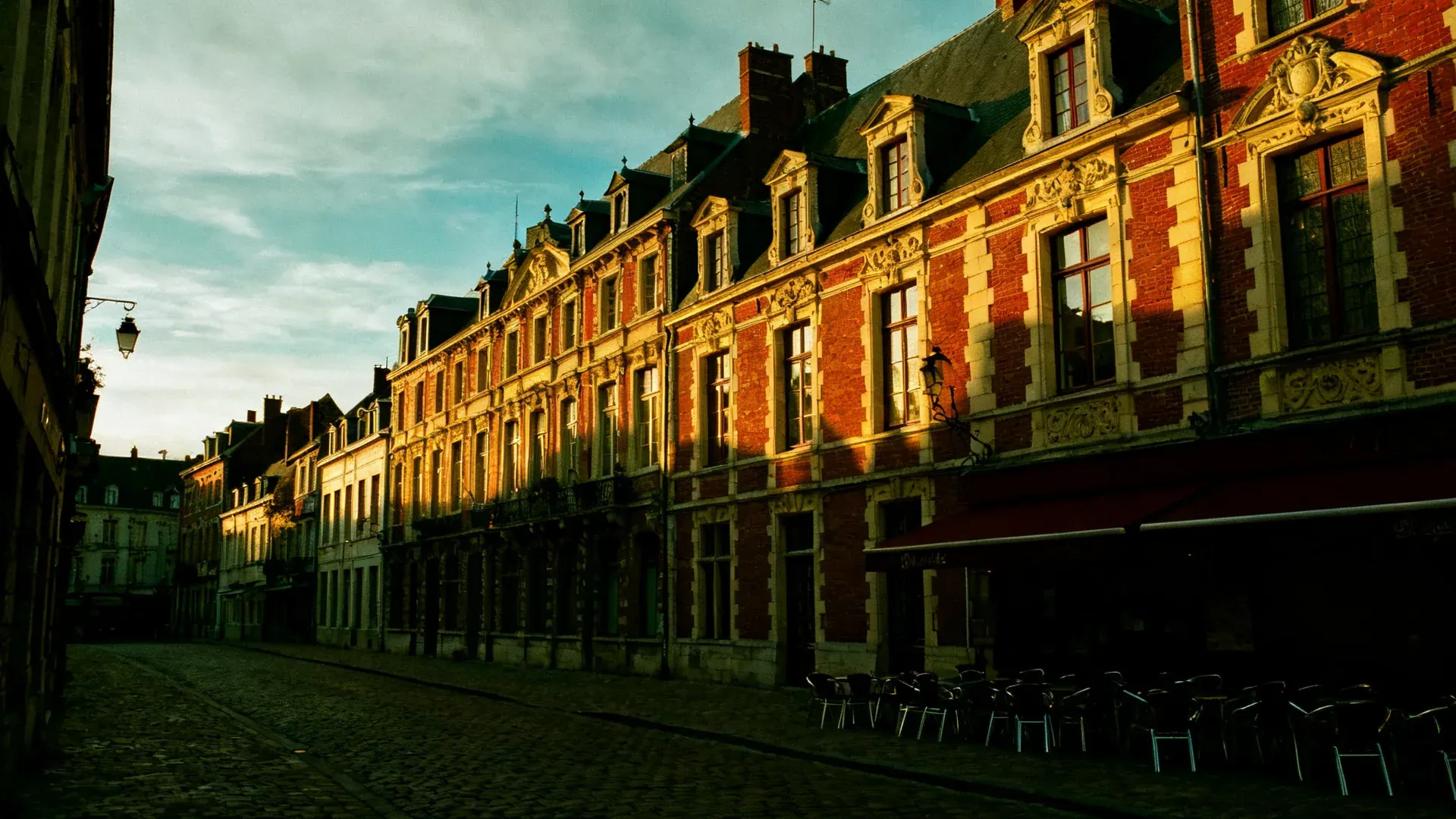
Lille was Flemish, then Burgundian, then Spanish before becoming French in 1667, and its centre still shows it: brick and carved-stone façades, gables, cobbles and inner courtyards. Old Lille is best explored on foot, from the Vieille Bourse to the Cathédrale de la Treille, and the city has turned its estaminets, the traditional Flemish taverns, into an institution. It is a short-break destination, an hour from Paris by TGV, not much more from London and closer still to Brussels.

Golf here is a matter of old clubs, born of the textile bourgeoisie or of the housing projects of the 1960s. Le Sart, founded in 1910, is the senior club of the metropolitan area; Bondues and Brigode, opened at the end of the 1960s, were designed by British architects in the grounds of châteaux. All are played among tall trees, on flat ground where precision counts for more than length.

All four courses are within thirty minutes of the centre, so you can play in the morning and sightsee in the afternoon. Two to four nights are enough to take in Bondues, Brigode and Le Sart, add Vert Parc or the second course at Bondues, and keep one evening for the Palais des Beaux-Arts and another for an estaminet.

The courses

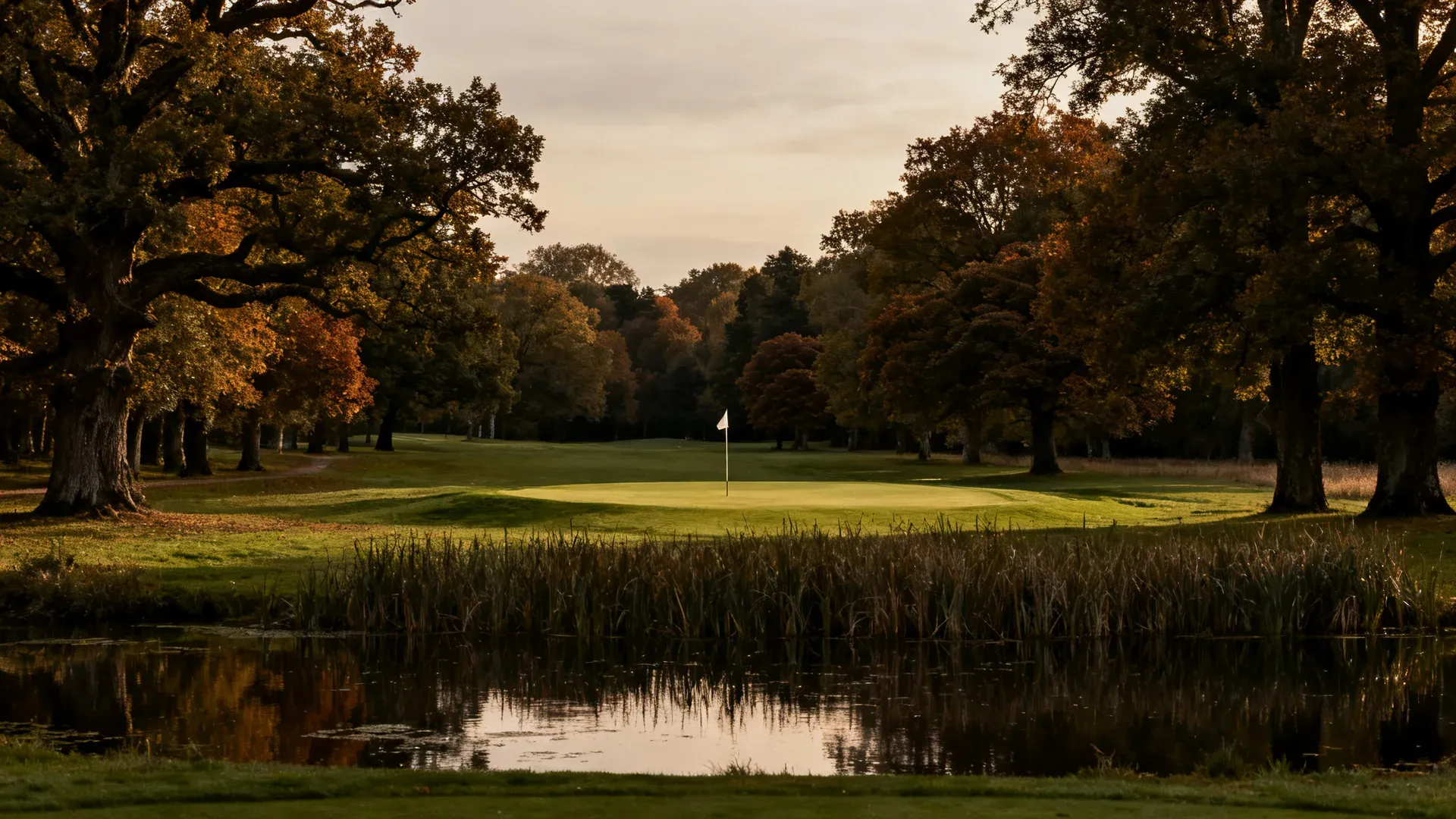
Green surrounded by tall oaks in autumn colours, a reed-fringed pond in the foreground

Golf de Bondues, parcours Hawtree

  • Architect: Fred Hawtree
  • 18 holes
  • Par 73

Twenty minutes north of Lille, Bondues is a members' club founded in 1968 around the Château de la Vigne, an 18th-century folly that became the clubhouse. Fred Hawtree laid out the longest course on the estate here, a par 73 of more than 6,200 metres, among trees planted by the landscape designer Russell Page. The club has a second eighteen, the Trent Jones, begun by Robert Trent Jones Sr in 1967 and completed by his son, wider but strewn with water and bunkers. The finest set-up in the Lille area.

Signature hole. The 18th on the Hawtree, a par 5 doglegging right, climbs back towards the Château de la Vigne: place your drive on the left of the fairway to open up the second shot.

Official website
Golf de Brigode

  • Architect: Harold J. Baker, John Harris
  • Opened 1971
  • 18 holes

At Villeneuve-d'Ascq, a quarter of an hour from Lille, Brigode occupies 54 hectares of the former grounds of the Château d'Annapes, once owned by the Comte de Montalembert. The architects Harold J. Baker and John Harris laid out the course among century-old trees, making the most of the ponds; the first holes were played in 1969 and the club was inaugurated in 1971. The star-shaped routing often brings you back past the clubhouse, and water comes into play at the end of several holes. Brigode hosted the first Lille Open in 1982.

Signature hole. The 18th is a long par 4 whose second shot carries a stretch of water to reach a large green.

Official website

Golf du Sart

  • Architect: Allan Macbeth; Percy Boomer (1935)
  • Opened 1910
  • 18 holes
  • Par 71

The oldest course in the Lille area was founded in 1910 by six friends, to a design by the Scot Allan Macbeth, then extended to eighteen holes after the Great War and redesigned in 1935 by the Englishman Percy Boomer. The château of 1740 still provides the backdrop. Now surrounded by the town, at Villeneuve-d'Ascq, this parkland course is short, 5,724 metres for a par 71, but narrow and highly technical, with small greens. The club sums it up simply: leave the driver in the bag.

Official website

Golf Le Vert Parc

  • Opened 1992
  • 18 holes
  • Par 71

In the Weppes countryside at Illies, some twenty minutes south-west of Lille, Vert Parc opened in 1992 on around sixty hectares. Taken over in 2016, the course has been reworked: one hole made way for a driving range over water, another was split in two. Today it is a par 71 of 5,818 metres, more open and more relaxed than the historic clubs, with lakes and wide fairways. A good round for the end of a trip, or for warming up.

Official website

Where to stay

L'Hermitage Gantois

Founded in 1462, the Hermitage Gantois was a hospice until 1995 before becoming, in 2003, a five-star hotel in the heart of Lille. Its brick and stone buildings surround courtyards and gardens, and some rooms keep their original beams and fireplaces. The spa, with a pool and hammam, is included for guests. A quiet address, a few minutes' walk from the Grand'Place.

Clarance Hotel

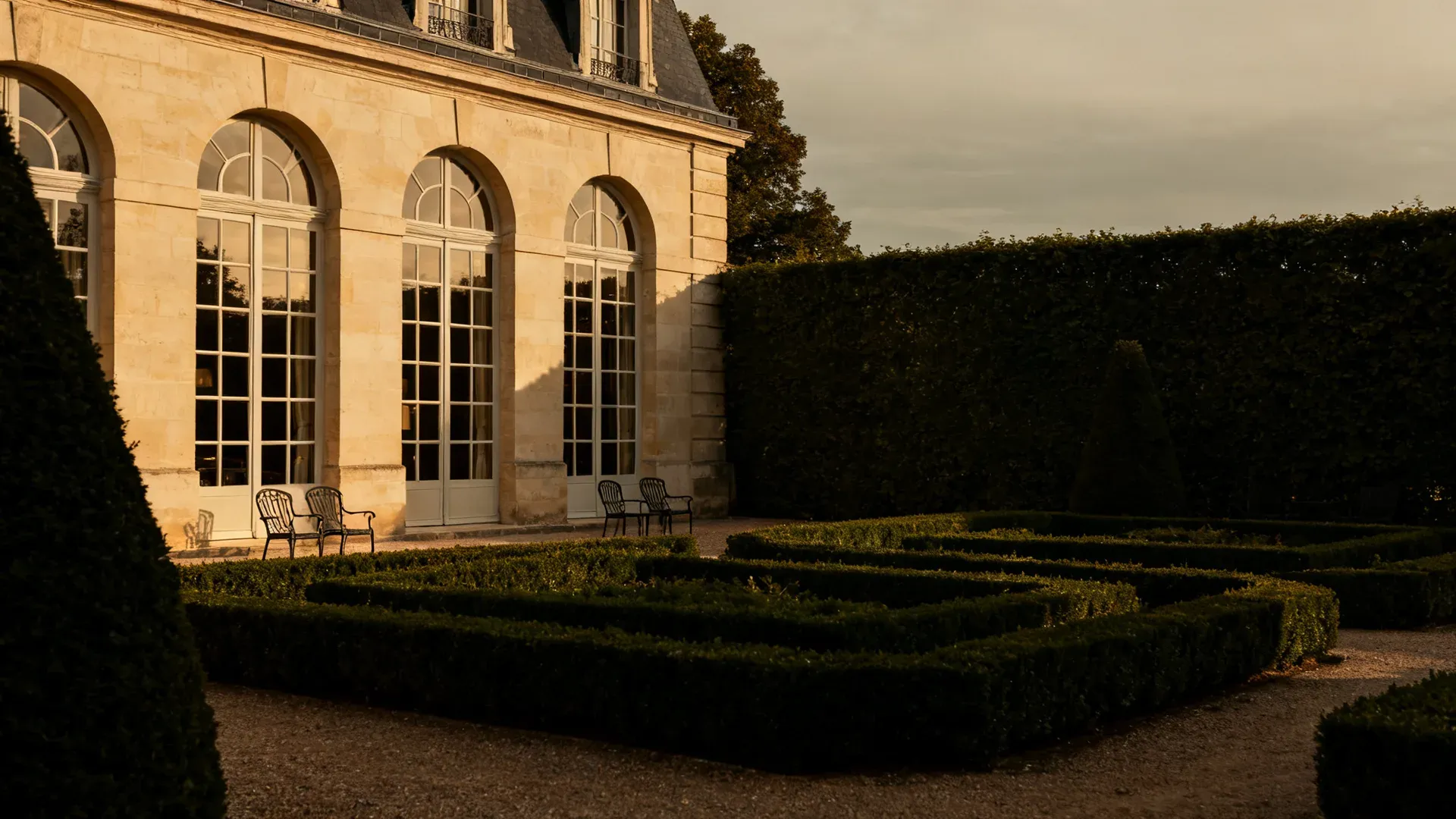
On the Rue de la Barre in Old Lille, the Clarance occupies a town mansion built in 1736 for the Comtesse d'Hespel: twenty-seven rooms, each one different. Ask for the Clarance Suite on the third floor, reached by its own staircase and looking over the rooftops. From May to October, weather permitting, La Table serves lunch in the garden beside its organic vegetable plot; the restaurant is closed on Sundays and Mondays.

Pale stone town-mansion façade with tall arched French windows, formal garden of clipped box

Where to dine

Le Restaurant du Cerisier

On the first floor of a contemporary building on the Avenue du Peuple-Belge, chef Guillaume Barengo serves creative cooking, with one Michelin star, in front of an open kitchen. Rigorously chosen seasonal produce and technical precision: the most ambitious table in the centre. The brasserie on the ground floor offers a simpler version.

Bloempot

In a former joiner's workshop in Old Lille, at the back of a brick courtyard, Florent Ladeyn and Florence Grave cook only the produce of the region, in menus dictated by the growers. Parquet floors, large glass roofs and dried flowers: a locavore address recommended by the Michelin Guide. No telephone bookings: reserve through the website or in person.

Estaminet Au Vieux de la Vieille

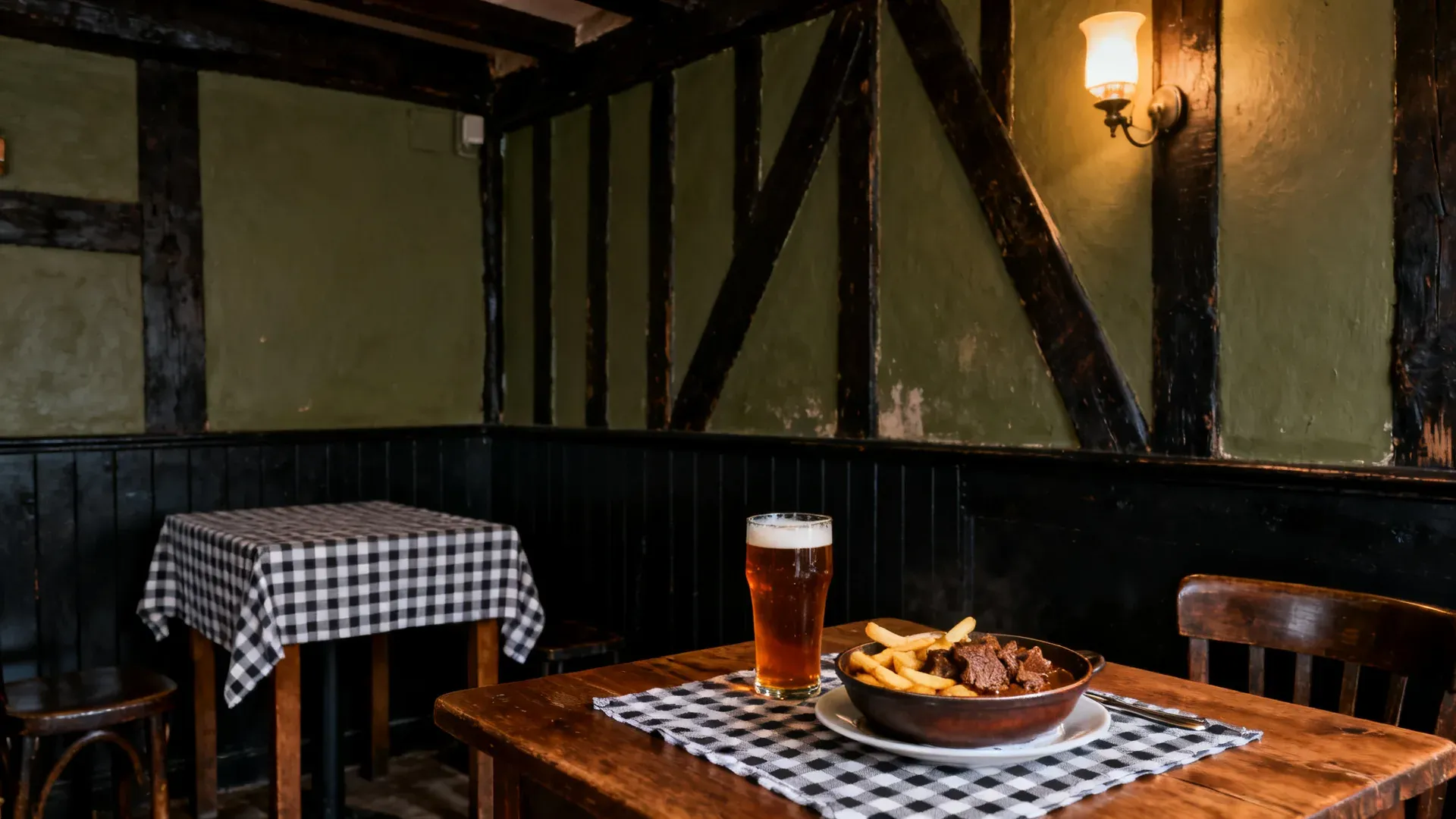
On the little Place aux Oignons, right in Old Lille, this estaminet serves the classics of northern France in an old-fashioned setting: welsh rarebit, carbonnade flamande, chicken with Maroilles, fricadelle, with beers from the region. The ideal place for an unceremonious dinner after a day's golf.

Dark wooden tavern table with an amber beer and carbonnade served with chips, warm wall-lamp light

Beyond golf

The Palais des Beaux-Arts

Opened in 1892 on the Place de la République, the Palais des Beaux-Arts holds one of the richest collections in France after the Louvre: Flemish primitives and masters, Rubens, Van Dyck, Goya, Delacroix. It also keeps fifteen relief maps of fortified towns, military models from the time of Vauban. Allow half a day.

Old Lille and the Vieille Bourse

Built in 1652 and 1653 by Julien Destrée, the Vieille Bourse brings together twenty-eight houses around a courtyard where booksellers and chess players set up every day. From there, the cobbled streets of Old Lille lead to the Rue de la Monnaie, the Hospice Comtesse and the Cathédrale de la Treille, between brick and carved-stone façades and designers' boutiques.

La Piscine in Roubaix

Twenty minutes from Lille, Roubaix's museum of art and industry opened in 2001 in an Art Deco swimming pool built between 1927 and 1932 by Albert Baert. The main pool remains at its centre, lined with sculptures, and the collections bring together textiles, decorative arts and 19th- and 20th-century painting, from Camille Claudel to Tamara de Lempicka.

When to go

The climate is oceanic and cool, with rain spread throughout the year. The best period runs from April to September: long days, mild temperatures of around twenty degrees in summer and courses in good condition. Summer remains pleasant and the courses are rarely busy. Autumn is often damp, winter cold and grey; the courses stay open but winter greens are common. The Braderie, the great flea market in early September, fills the hotels.

Getting there

The TGV links Paris-Nord with Lille in about an hour, and Eurostar serves Lille-Europe from London and Brussels. The TGV station at Paris-Charles de Gaulle airport is also an hour away by train. Lille-Lesquin airport (LIL), twenty minutes from the centre, mainly handles domestic and European flights. A car is still useful for the golf courses, all within thirty minutes.

Frequently asked questions

What is the best golf course near Lille?

Bondues, twenty minutes north of the city, with its two eighteen-hole courses by Fred Hawtree and Robert Trent Jones, is the most complete. Brigode and Le Sart, at Villeneuve-d'Ascq, are the other two benchmarks.

What is the oldest golf club in Lille?

Golf du Sart, at Villeneuve-d'Ascq, founded in 1910. It is a short, technical par-71 course played around a château dating from 1740.

How far are the golf courses from Lille city centre?

Brigode and Le Sart are about a quarter of an hour from the centre, Bondues twenty minutes and Vert Parc, at Illies, twenty to thirty minutes depending on traffic.

How do I get to Lille for a golf trip?

By TGV from Paris in about an hour, by Eurostar from London or Brussels, or by air to Lille-Lesquin, twenty minutes from the centre.

When is the best time to play golf in Lille?

From April to September, when the days are long and the courses in their best condition. Winter remains playable, but cold, damp and often on temporary greens.

Tailor-made

Your golf trip: Lille

Tee times, suites, transfers and tables: your concierge replies within 24 hours with a proposal shaped around you.

Explore: France →