Golf guide • France • Provence

Golf in Marseille: Pagnol's hills, then the sea and the calanques

Marseille lends itself to a short break of golf and sea: La Bastide de la Salette, a hilly 18 holes by Michel Gayon, is played in the hills of the 11th arrondissement, and the Golf Club d'Aix-Marseille, the oldest club in the Bouches-du-Rhône, lays out its tree-lined fairways at Les Milles, half an hour away. Golfers come to play in the morning, then for the calanques, the Vieux-Port and a great restaurant, ideally from March to June and from September to November.

Plan this tripUpdated

Marseille is not a golf city in the way the neighbouring Riviera can be. It offers something else: a course in its own hills, some twenty minutes from the Vieux-Port, and a historic club halfway to Aix-en-Provence. In between, a city founded by Greeks from Phocaea more than twenty-six centuries ago, turned towards the sea, where you can swap golf clothes for a swimsuit in the same day.

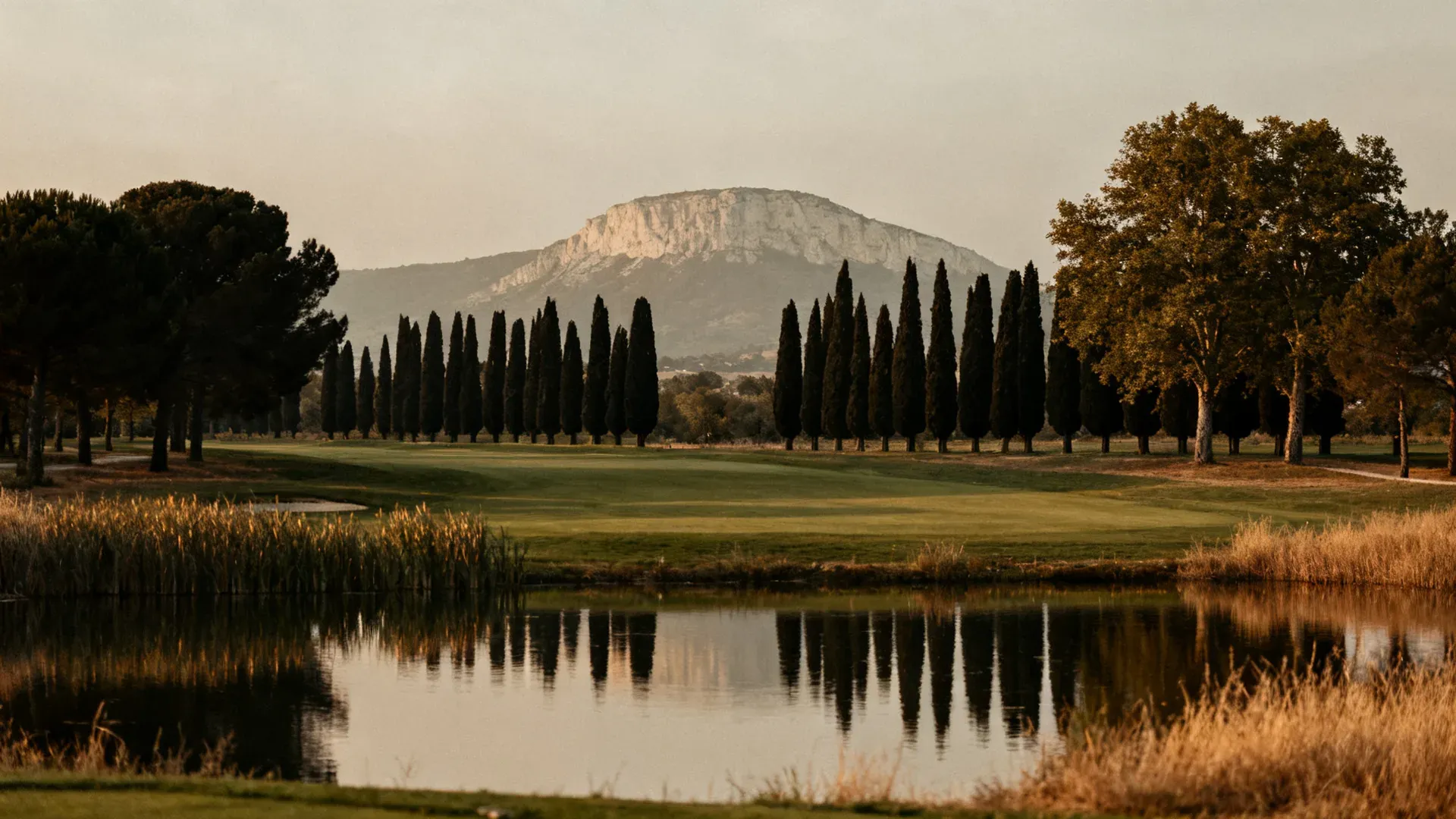
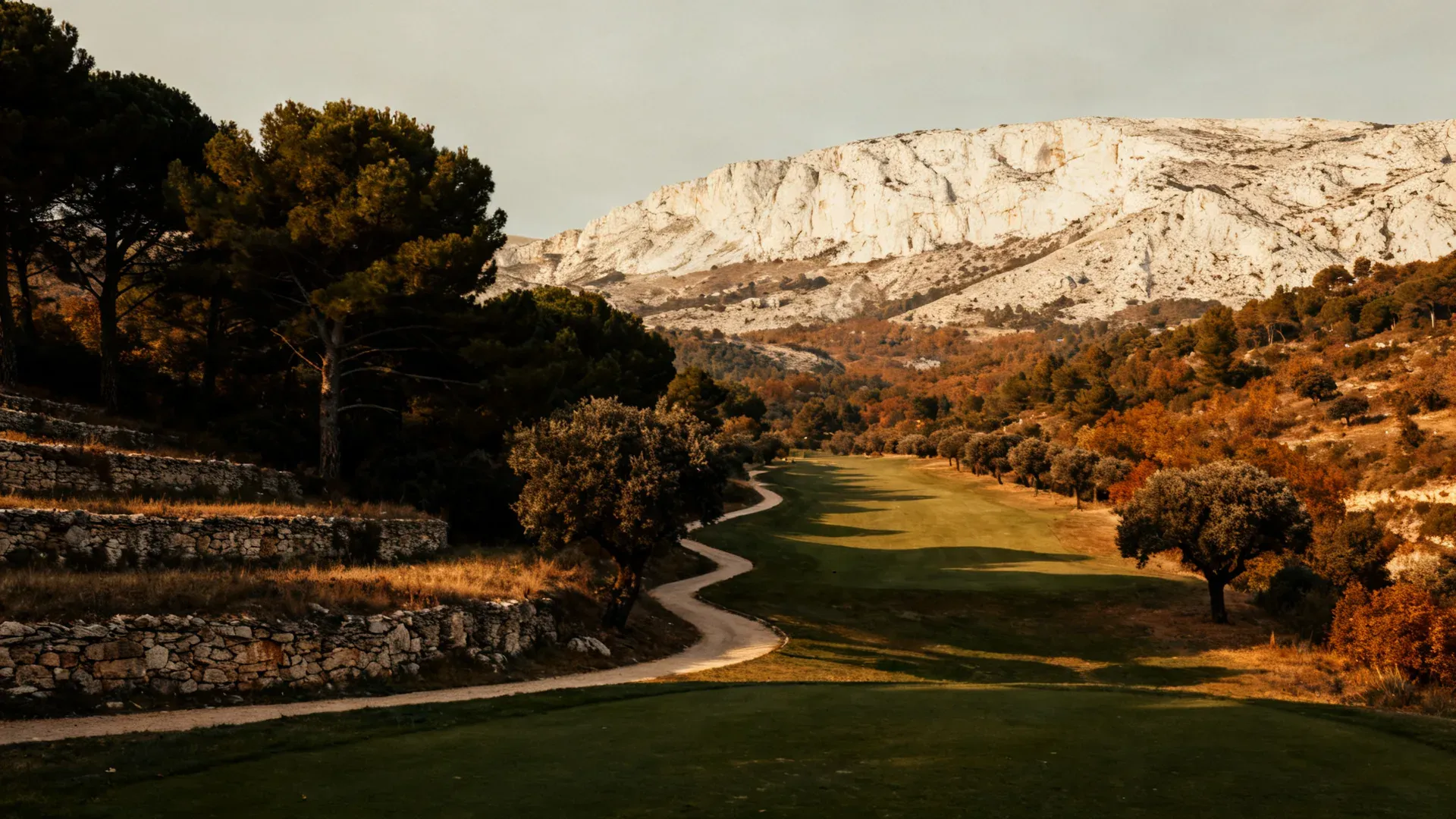
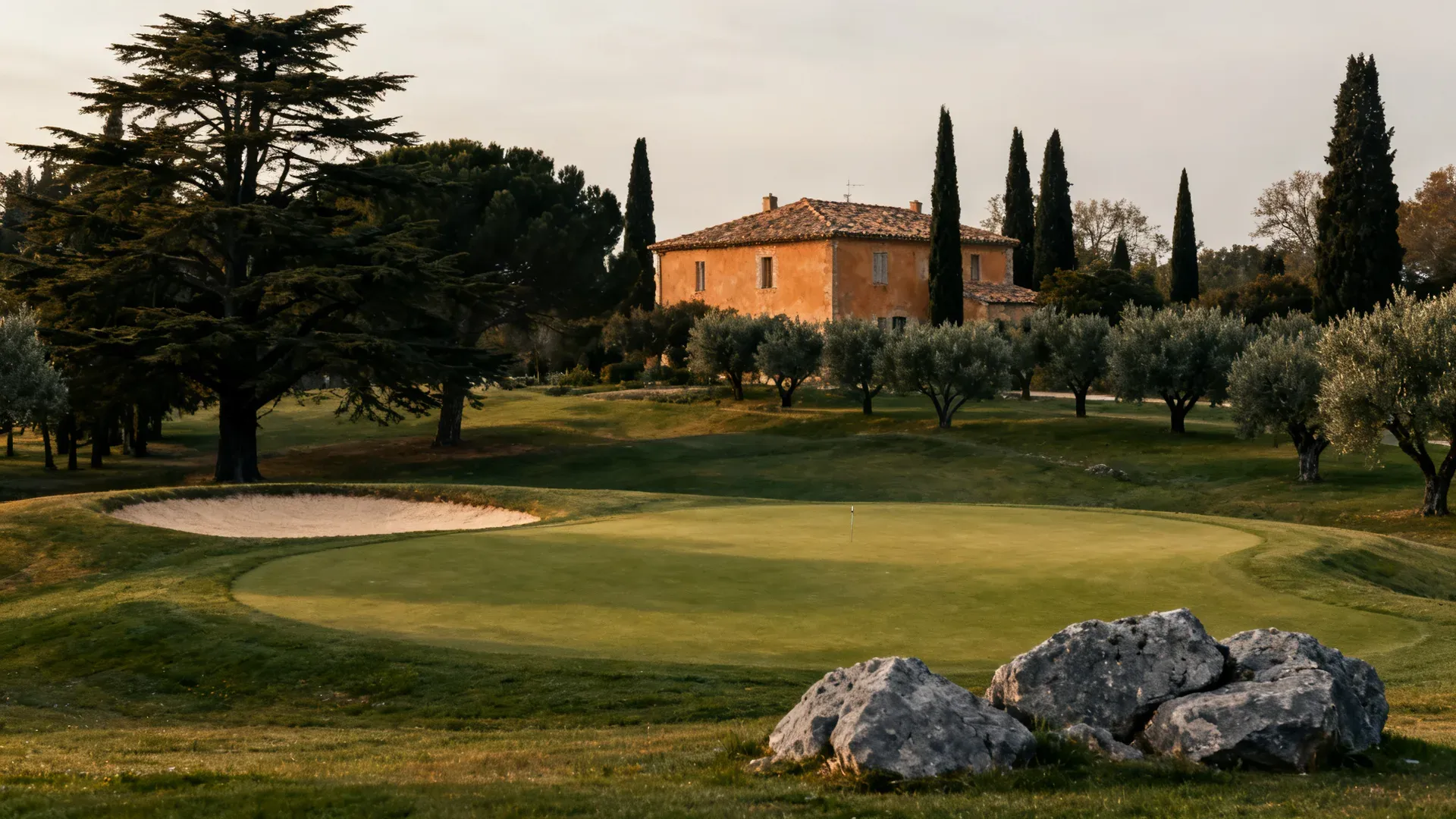
La Bastide de la Salette occupies 70 hectares on the heights of La Treille, the landscape of stone terraces and pinewoods that Marcel Pagnol wrote about. Two-hundred-year-old cedars of Lebanon, holm oaks, olive trees: the ground rises and falls, and the course demands more strategy than length. At Les Milles, the Golf Club d'Aix-Marseille plays a different tune, flatter, among oaks, pines, cypresses and poplars, on a layout whose first holes date from 1937.

Three or four nights are enough to play both courses and keep time for the essentials: a hike or a boat trip in the calanques, Le Panier and the Mucem, a bouillabaisse by the water and, for one evening, one of the city's two three-star restaurants. The clear, low winter light makes the cold season more pleasant than you might think.

The courses

Green and bunker surrounded by cedars, olive trees and cypresses, grey rocks in the foreground, an ochre farmhouse with a tiled roof

Golf Bastide de la Salette

  • Architect: Michel Gayon
  • 18 holes
  • Par 72

Designed by the architect Michel Gayon in the hills of La Treille, east of the city, this par 72 of 5,361 metres from the white tees is not measured by its length. The fairways slip through the valleys, alternating level ground with changes in elevation, and the hazards come one after another: ponds, mounds, rocks and well-placed bunkers. The estate keeps trees brought back from distant travels, cedars of Lebanon, strawberry trees and red-barked trees along the 1st. A tactical course, ideal for a first day, where a buggy is useful the first time round.

Signature hole. The 12th, a downhill par 3 of 149 metres: take two clubs less than usual and let the slope carry the ball to the green.

Official website
Golf Club d'Aix-Marseille

  • Architect: Peter Cannon
  • Opened 1937
  • 18 holes
  • Par 72

Founded in 1935 by twenty-nine members, the oldest club in the Bouches-du-Rhône opened its first nine holes in March 1937, designed by the Englishman Peter Cannon; the course grew to eighteen holes in 1954. A par 72 of 6,045 metres, it spreads across some 55 hectares of the Riquetti estate at Les Milles, a green lung among oaks, pines, cypresses, olive trees, poplars and willows, where you come across pheasants and ducks. A classic club course, flat and tree-lined, that hosts regional and national competitions.

Official website

Where to stay

InterContinental Marseille – Hotel Dieu

The former Hôtel-Dieu, a hospital designed in 1753 by Jacques Hardouin-Mansart de Sagonne, became a five-star hotel at the foot of Le Panier in 2013. 179 rooms and 15 suites by Jean-Philippe Nuel, 72 of them overlooking the Vieux-Port, a Clarins spa and a large terrace facing Notre-Dame-de-la-Garde. Everything is on foot: the Vieux-Port, the Mucem, the lanes of Le Panier.

Le Petit Nice Passedat

On the Corniche Kennedy, above the Anse de Maldormé, the Passedat family's villa is the most seafaring address in Marseille. A five-star Relais & Châteaux hotel, it houses Gérald Passedat's three-star restaurant, devoted to Mediterranean fish, with its signature Loup Lucie Passedat, and Le 1917, a simpler restaurant facing the sea. A house for those who prefer the sound of the waves to that of the city.

Where to dine

AM par Alexandre Mazzia

Born in Pointe-Noire and a former professional basketball player, Alexandre Mazzia opened AM in 2014 on Rue François-Rocca, in the 8th arrondissement, and won his third Michelin star in 2021. A succession of small smoky, spicy, briny mouthfuls unlike any other cooking. Open Wednesday to Saturday: book early.

Chez Fonfon

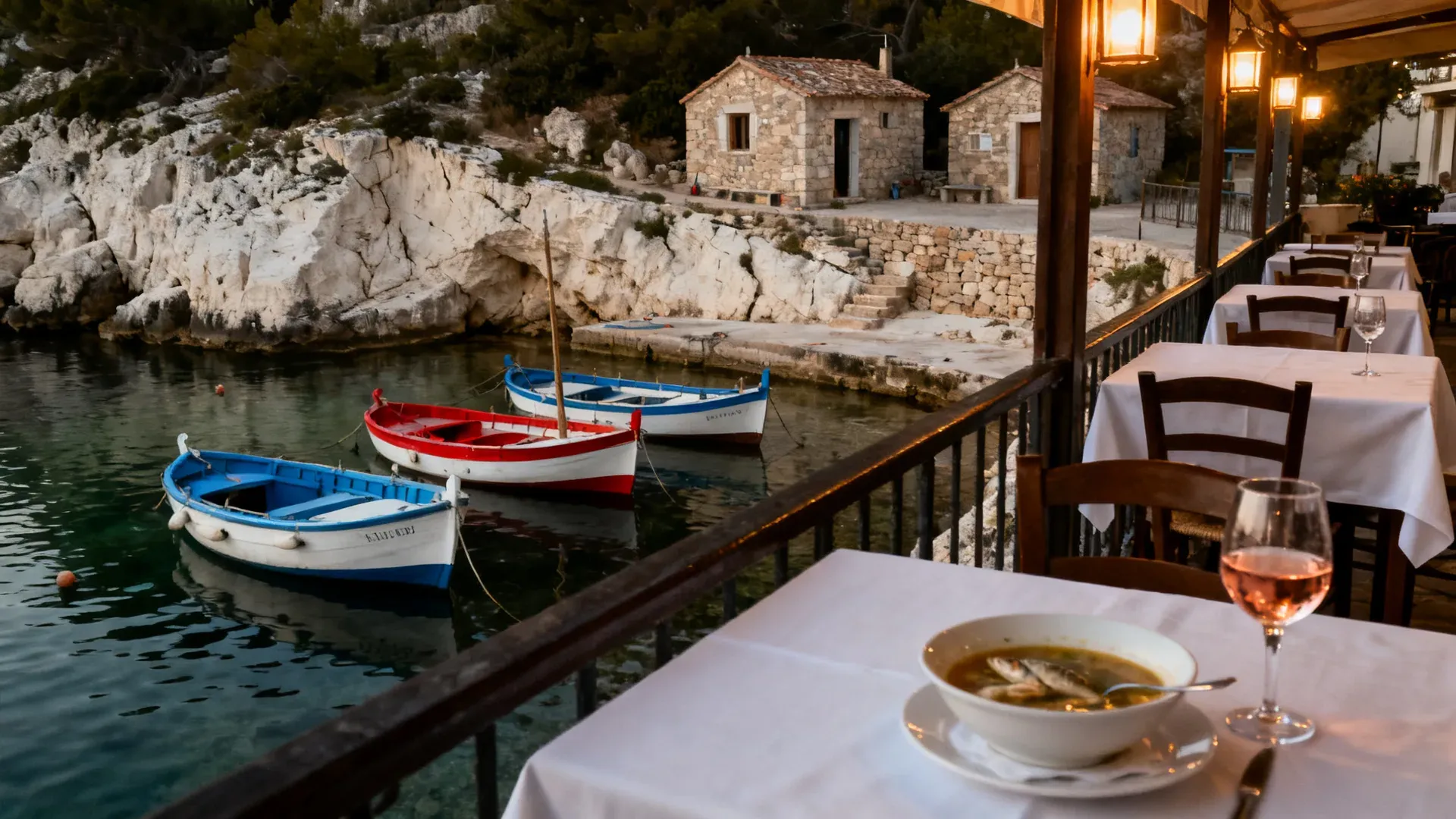
At the far end of the Vallon des Auffes, a small fishing harbour tucked beneath the Corniche, Chez Fonfon has served bouillabaisse since 1952. It follows the charter drawn up in 1980 by Marseille's restaurateurs: at least four species of Mediterranean fish, and no langoustine. A family institution, with its terrace above the boats, best enjoyed in the evening.

Terrace with white tablecloths, fish soup and a glass of rosé, colourful boats in a small limestone harbour

Beyond golf

The calanques

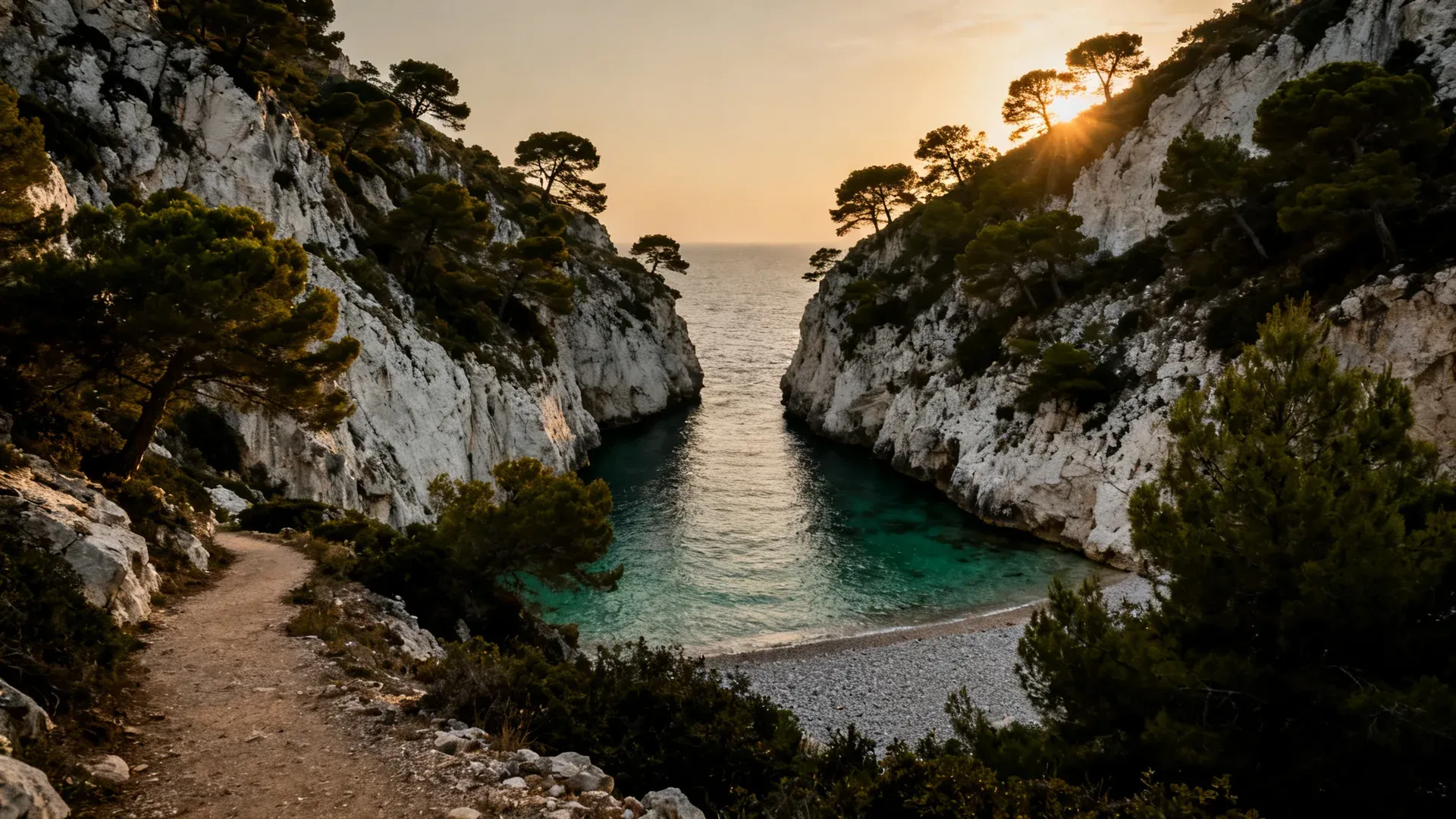
Created in 2012, the Calanques National Park protects 520 km² of land and sea between Marseille's southern districts, Cassis and La Ciotat. Sormiou, Morgiou, Sugiton and En-Vau can be reached on foot or by boat from the Vieux-Port. In summer, access to the hills is regulated daily according to fire risk: check the prefecture's map the day before, or choose the sea.

Le Panier and the Mucem

The city's oldest quarter runs down in lanes and steps towards the Vieux-Port. Below, the Mucem, designed by Rudy Ricciotti and opened in 2013 on the former J4 pier, wraps its galleries in a lattice of concrete; a 130-metre footbridge links it to Fort Saint-Jean. The roof terrace at sunset is worth the visit on its own.

Notre-Dame-de-la-Garde

Perched on the city's highest hill, the "Bonne Mère" has watched over Marseille since the 19th century. Walk up by the steps of the Vauban district or take the bus from the Vieux-Port, for the view over the Frioul islands, the harbour and, on a clear day, the Pagnol hills where La Salette is played.

Narrow calanque between white limestone cliffs and Aleppo pines, turquoise water and a pebble beach at sunset

When to go

Spring, from March to June, and autumn, from September to November, are the best seasons: 18 to 25 °C, courses in good condition and the sea still warm enough to swim in September and October. Summer is hot and dry, often above 30 °C, and best played early in the morning. Winter stays mild and bright, playable most days, but the mistral can blow hard for several days in a row.

Getting there

Marseille-Provence airport (MRS), at Marignane, is half an hour from the Vieux-Port by car and about twenty minutes from the Golf Club d'Aix-Marseille. From Paris, the TGV reaches Saint-Charles station in a little over three hours. A car is useful for the two courses; in town, everything can be done on foot, by metro or by taxi.

Frequently asked questions

What is the best golf course in Marseille?

Within the city itself, La Bastide de la Salette, a Michel Gayon par 72 in the hills of the 11th arrondissement. Half an hour away, the Golf Club d'Aix-Marseille at Les Milles is the oldest club in the Bouches-du-Rhône.

How many golf courses are there in Marseille?

Only one 18-hole course within the city limits, La Bastide de la Salette. The Golf Club d'Aix-Marseille, in the commune of Aix-en-Provence, is the trip's other benchmark course.

Can non-members play the Golf Club d'Aix-Marseille?

Yes, on a green fee all year round, on presentation of a golf federation licence and with compulsory booking at least two days ahead.

When is the best time to play golf in Marseille?

From March to June and from September to November. Summer means playing at dawn; winter is mild and bright, but exposed to the mistral.

Which airport is best for a golf trip to Marseille?

Marseille-Provence (MRS), half an hour from the centre and about twenty minutes from the Golf Club d'Aix-Marseille.

Tailor-made

Your golf trip: Marseille

Tee times, suites, transfers and tables: your concierge replies within 24 hours with a proposal shaped around you.

Explore: France →