Golf guide • France • Île-de-France

Golf in Versailles: three legendary courses around the château

Versailles, some twenty kilometres west of Paris, is surrounded by three courses that have shaped the history of French golf: La Vallée at La Boulie, laid out by Willie Park Jr. in 1901 and the first host of the French Open, the Albatros at Le Golf National, stage of the 2018 Ryder Cup and the 2024 Olympic Games, and Saint-Nom-la-Bretèche, designed by Fred Hawtree. Golfers come to play in the morning and enjoy the château in the afternoon, from April to October.

Plan this tripUpdated

Few cities can line up, within half an hour of their centre, the course where the first French Open was played, the Ryder Cup course and the one where Arnold Palmer and Jack Nicklaus won the Canada Cup together. Versailles can. La Boulie lies within the town itself, a few minutes from the château; Le Golf National, at Guyancourt, and Saint-Nom-la-Bretèche, between the forest of Marly and the plain of Versailles, are some twenty minutes' drive away.

The three courses could hardly be more different. La Vallée is an early 20th-century layout, short, undulating and technical, beneath tall trees. The Albatros is a golf stadium sculpted out of a former farming plateau, with its spectator mounds and water hazards. Saint-Nom, finally, is a members' club with an Anglo-Saxon layout, long the host of the Trophée Lancôme. Two of them restrict access for visitors: that is what decides the schedule.

The rest of the trip is spent at the château, in the park and in the streets of the Notre-Dame quarter, where you walk to dinner after golf. Three to four nights are enough to play two or three courses and keep a whole day for Trianon, the Queen's Hamlet and the Grand Canal. Paris remains half an hour away by train for an evening out.

The courses

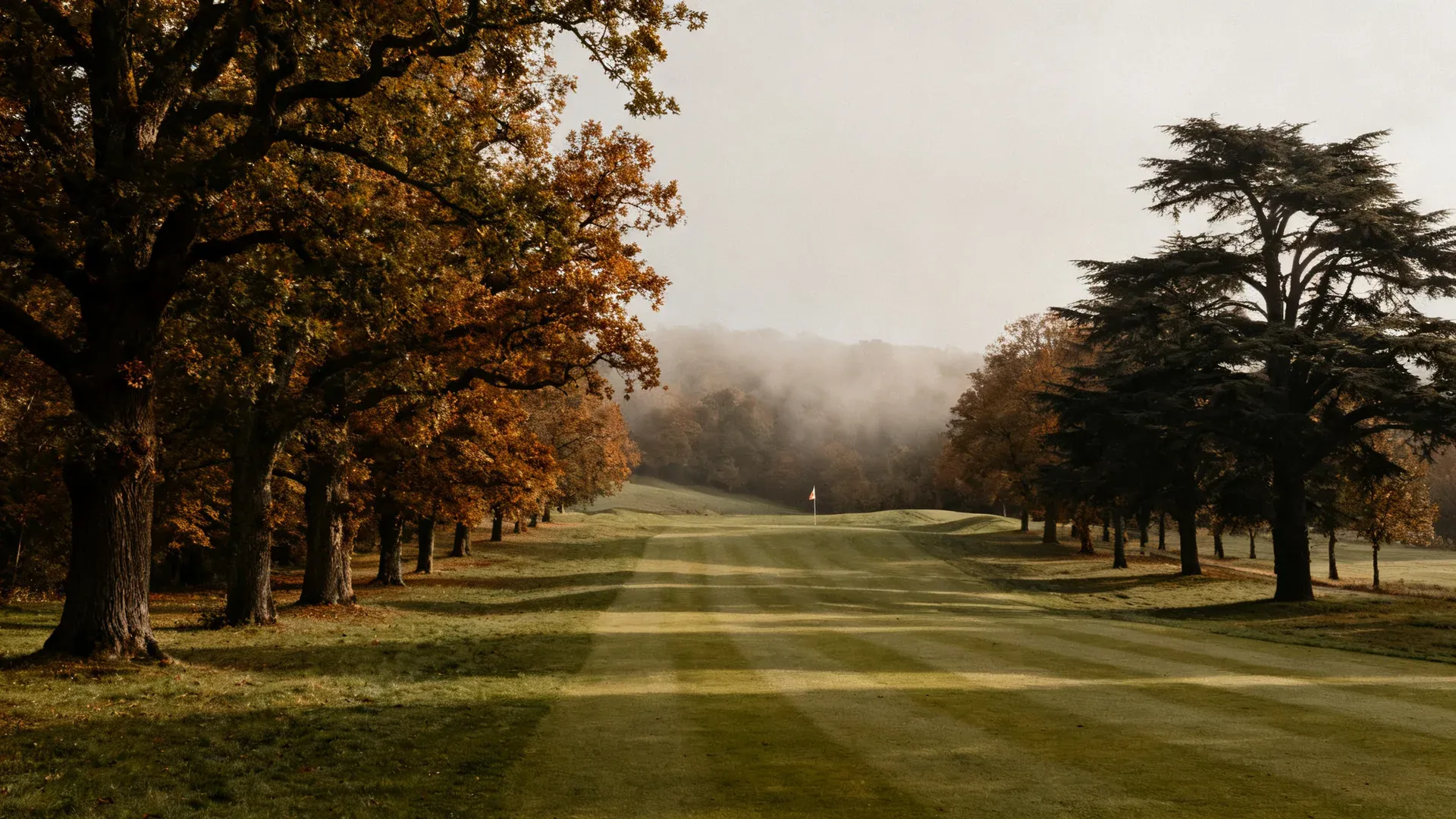
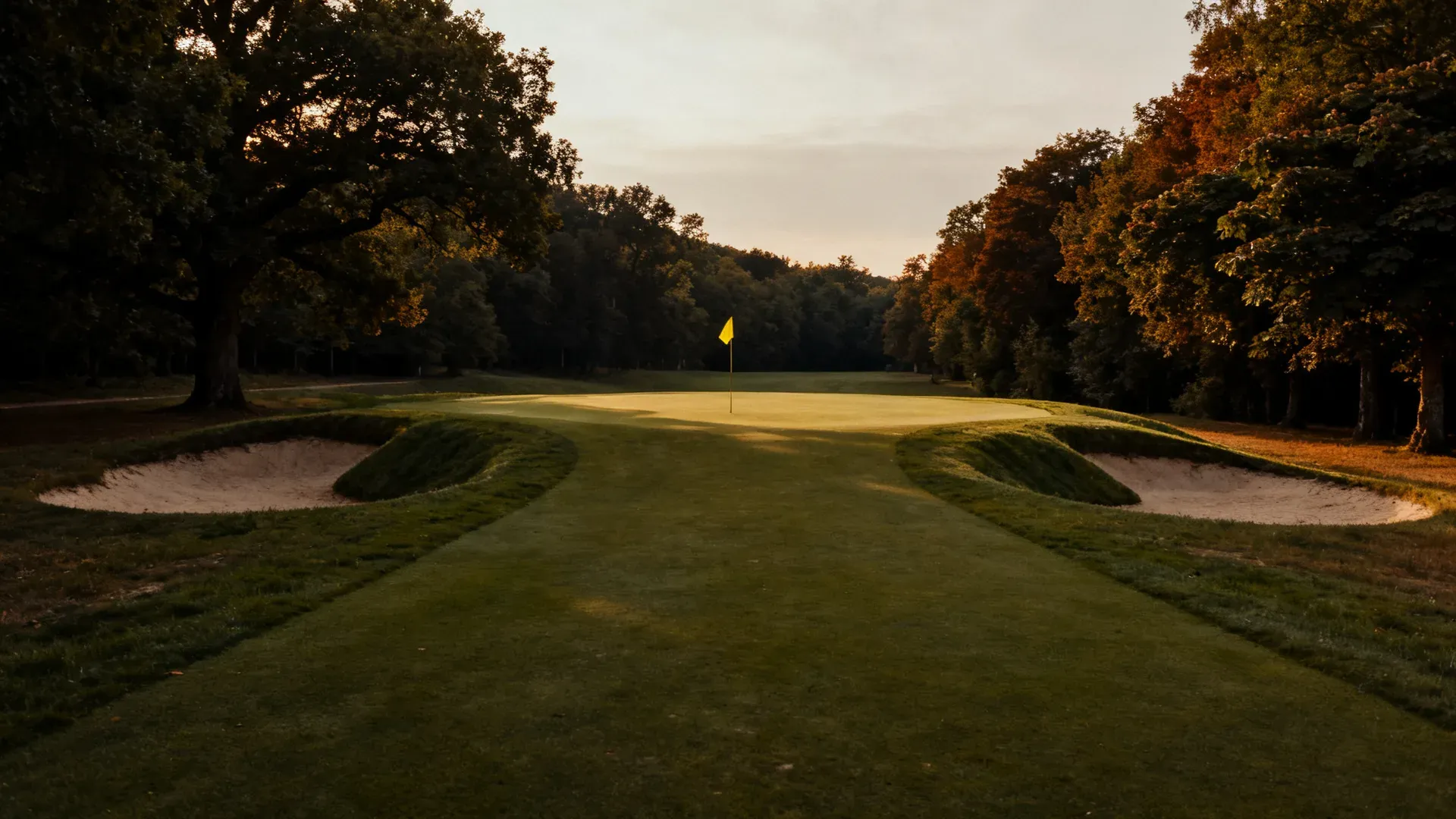
Raised green between two turf-faced bunkers, a yellow flag, oaks and chestnuts in evening sun

Golf de la Boulie – La Vallée

  • Architect: Willie Park Jr.; Jacques Roussel (1952)
  • Opened 1901
  • 18 holes
  • Par 72

Founded in 1901 as the Golf de Paris, the club at La Boulie has belonged to the Racing Club de France since the 1950s. La Vallée, designed by the Scot Willie Park Jr., hosted the first French Open in 1906, won by Arnaud Massy, and the event returned there until 1986, the year Seve Ballesteros won. Damaged during the war, the course was restored by Jacques Roussel. It is not long, but its narrow fairways, pronounced contours and deep bunkers demand precise play. Visitors play on weekdays, and at weekends too in summer.

Signature hole. The 10th is a par 3 of around 195 metres, ringed by bunkers, whose fast, sloping green features in the collection of the world's 500 greatest holes.

Official website
Golf National – L'Albatros

  • Architect: Hubert Chesneau, Robert von Hagge
  • Opened 1990
  • 18 holes
  • Par 72

Opened in 1990 at Guyancourt, the Albatros was designed by Hubert Chesneau with the help of Robert von Hagge, who moved more than a million cubic metres of earth to shape the fairways and spectator mounds. Almost permanent host of the French Open since 1991, it staged the Ryder Cup in 2018 and the golf events of the Paris Games in 2024. A renovation lasting nearly two years entirely redesigned holes 4, 5 and 6 and reworked several greens and bunkers. A long, exposed championship course, open to every player who books.

Official website

Golf de Saint-Nom-la-Bretèche – Parcours Rouge

  • Architect: Fred Hawtree
  • Opened 1959
  • 18 holes

Daniel Féau turned a hillside farm between the forest of Marly and the plain of Versailles into a club that opened in 1959; Fred Hawtree designed its two courses. Saint-Nom saw Palmer and Nicklaus win the Canada Cup in 1963 and, from 1970 to 2003, hosted the Trophée Lancôme, won four times by Ballesteros. It remains a members' club: visitors can only play in summer, on weekdays, booking a week ahead. One to plan for a summer trip, then, for anyone keen to walk these historic fairways.

Signature hole. The 6th, a par 4 of some 400 metres, features among the world's 500 greatest holes: place your drive in the right half of the fairway, away from the bunker and the trees on the left corner.

Official website

Where to stay

Waldorf Astoria Versailles – Trianon Palace

Opened in 1910 by the architect René Sergent on the edge of the château park, the Trianon Palace is now a Waldorf Astoria. It was in its Salon Clemenceau that the terms of the peace treaty were handed to the German delegation in May 1919. Ask for a park-side room in the 1910 building rather than in the 1990s Pavillon. A large spa with an indoor pool; La Boulie is about ten minutes away.

Hôtel du Jeu de Paume

In the Saint-Louis quarter, two minutes from the château, François Comyn turned a former notary's office into a sixteen-room hotel, opened in 2014 and decorated by the designer Nicolas Stadler, with a small garden and a lounge with an open fire. The small doubles are tight: ask for a standard double. For the car and golf bags, the Saint-Louis cathedral car park is three minutes away, at a reduced rate for guests.

Hôtel Le Versailles

On the Rue Sainte-Anne, five minutes' walk from the château, this four-star hotel with 47 rooms plays on décor inspired by French history, with a lounge bar and a leafy terrace. Breakfast is served from 6.30 am on weekdays, handy for an early tee time at La Boulie, and can be taken in the patio. Ask for a Deluxe room, which has a sitting area. The Golf National is about twenty minutes away.

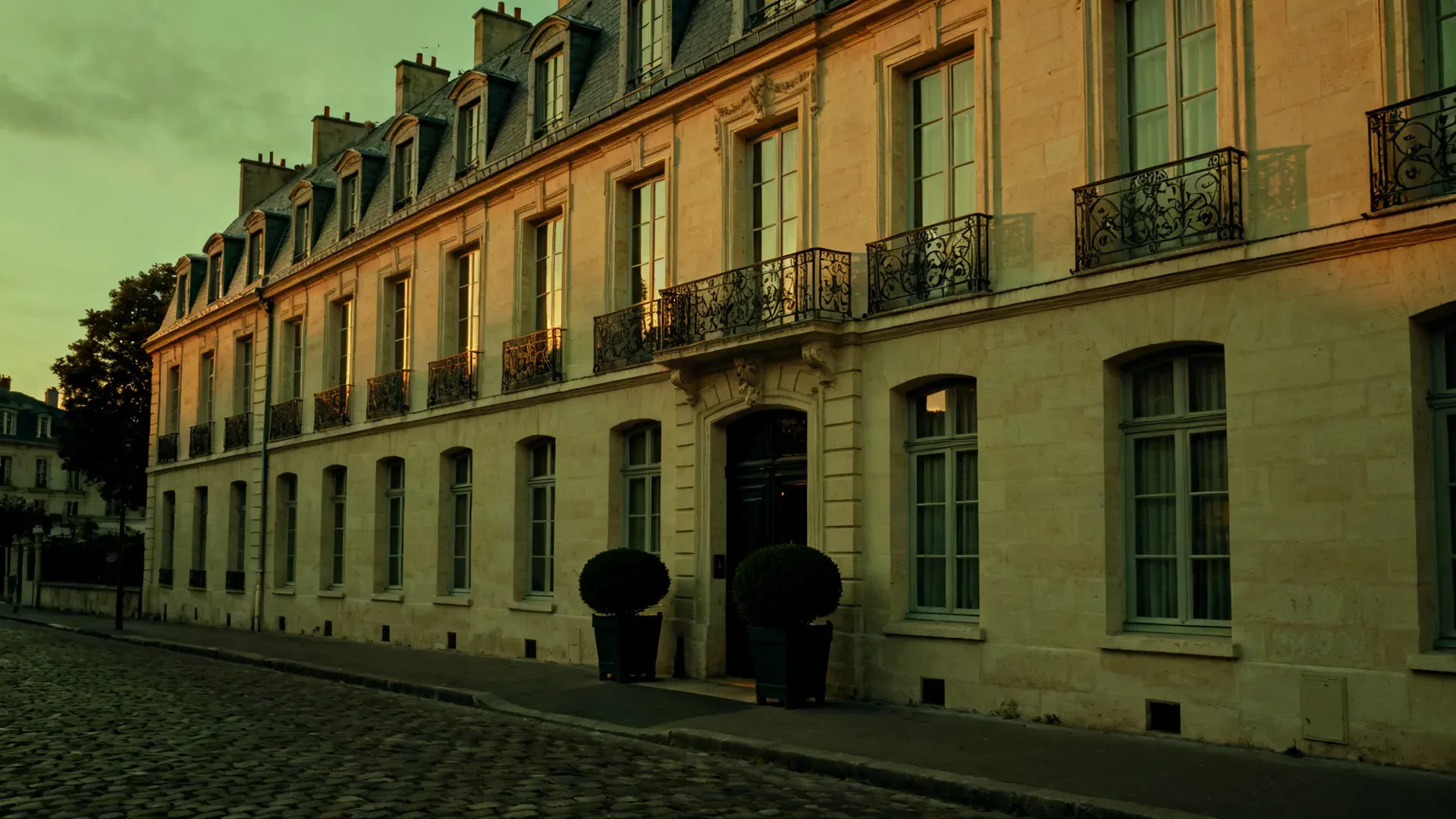
Pale stone town-mansion façade with wrought-iron balconies and a mansard roof, two potted box trees by the door

Where to dine

La Table du 11

Michelin-starred since 2016, Jean-Baptiste Lavergne-Morazzani's restaurant occupies the Cour des Senteurs, a stone's throw from the château. A single menu in several sequences, organic produce, responsibly sourced fish and meat, vegetables from the chef's family garden and a fine cellar. Closed on Sunday and Monday; lunch, served on Friday and Saturday only, fits neatly after a morning round at La Boulie.

Au Petit Marquis

On the Place du Marché Notre-Dame, this former wine merchant's, which the house dates to 1686, became a brasserie in 1985 in the spirit of Les Halles. Nathalie and Franck run three beamed dining rooms and a terrace on the square, cooking with produce from the market. Order the Petit Marquis-style steak tartare or the AAAAA andouillette, and let Franck choose the wine. Open every day.

Beyond golf

Trianon and the Queen's Hamlet

North of the park, the Trianon estate reveals another, more intimate court. For Marie Antoinette, Richard Mique built a hamlet of thatched cottages around a pond between 1783 and 1786, inspired by Rousseau, where the queen escaped court etiquette; ten of the twelve original houses survive. Allow half a day, and come early: the paths of the Petit Trianon are far quieter before the groups arrive.

The King's Kitchen Garden

Created between 1678 and 1683 by Jean-Baptiste de La Quintinie to supply the table of Louis XIV, the Potager du Roi covers nine hectares below the château. Its walls still shelter espaliered fruit trees, and the École nationale supérieure de paysage, which has managed it since 1995, opens it to the public from April to October, Tuesday to Sunday.

The Grand Canal and the Musée Lambinet

Dug under Le Nôtre's direction between 1667 and 1679, the Grand Canal forms a cross nearly 1.7 kilometres long on its main arm; you can explore it by rowing boat or by bike. In town, the Musée Lambinet, housed in a 1752 town mansion on the Boulevard de la Reine, tells the story of Versailles through paintings, furniture and sculpture, including works by Houdon.

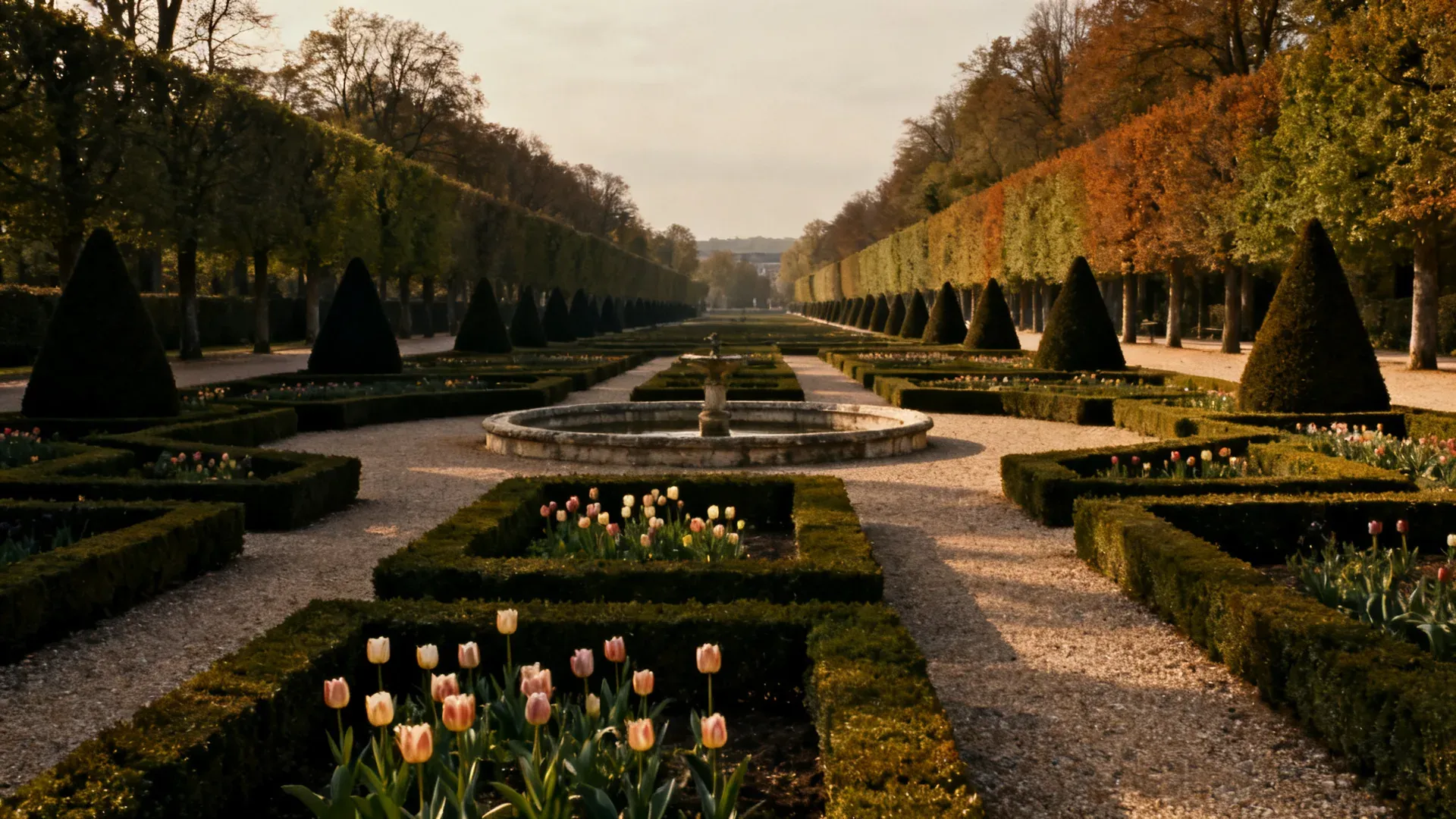
Formal French garden with box parterres, cone-clipped yews, a stone pool and tulips in spring

When to go

The season runs from April to October. Spring brings courses in good condition and the château's flower beds in bloom, autumn golden forests around La Boulie and fewer people in the park. In July and August, Saint-Nom and Saint-Cloud open to visitors and La Boulie also takes green fees at weekends, but the château is very crowded. Winter remains playable, with greens sometimes temporary and short days.

Getting there

Paris-Orly is the closest airport, about half an hour by road; Paris-Charles de Gaulle, better served by international flights, takes an hour or more depending on traffic. By train, the RER C reaches Versailles Château Rive Gauche, five hundred metres from the château entrance. To move between courses, a car with driver remains the simplest option.

Frequently asked questions

What is the best golf course near Versailles?

The Albatros at Le Golf National, at Guyancourt, is the most famous: it hosted the 2018 Ryder Cup and the golf at the 2024 Games. La Vallée at La Boulie, in Versailles itself, is the historic course, host of the first French Open in 1906.

Can I play La Boulie without being a member?

Yes, on weekdays, with a golf licence and a handicap index below 36, booking no earlier than 48 hours ahead. Weekends are reserved for members and their guests, except in the summer period.

Is Saint-Nom-la-Bretèche open to visitors?

Only in summer, on weekdays, booking a week ahead and with a French Golf Federation licence. The rest of the year, the club is reserved for members and their guests.

How long does it take to get from Versailles to Le Golf National?

About twenty minutes by car. Le Golf National is at Guyancourt, near Saint-Quentin-en-Yvelines RER station, and has a 131-room Novotel beside the course.

When is the best time to play golf in Versailles?

From April to October. Summer offers the widest access to the private clubs; spring and autumn bring quieter courses and a less crowded château.

Tailor-made

Your golf trip: Versailles

Tee times, suites, transfers and tables: your concierge replies within 24 hours with a proposal shaped around you.

Explore: France →