Golf guide • Tunisia • Greater Tunis

Golf in Tunis: a course by the salt lagoon, Carthage and the medina

Tunis has two 18-hole courses north of the city, about twenty minutes from each other: The Residence Golf Course, a par 72 designed by Robert Trent Jones II between the sea and a salt lake near Gammarth, and Golf de Carthage, the country's oldest club, founded in 1927 at La Soukra. Golfers come to pair two very different courses with the medina, Carthage and Sidi Bou Said, ideally from March to May and in October and November.

Plan this tripUpdated

Tunis is not a destination for playing six courses in six days. It is a capital where golf slips in between visits: just two 18-hole courses, both north of the city, between the airport and the Gammarth coast. One is a championship layout opened in 2008, the other a club course born in 1927, short, shaded and intimate. Together they fill a stay of three to five nights, leaving the rest of the time for a city where Punic and Roman Carthage, the medina and the white houses of the northern suburbs overlap.

The best base is the coast, between La Marsa, Sidi Bou Said and Gammarth: both courses are ten to twenty minutes' drive away, the sea at the end of the street, and the medina half an hour by car. Those who prefer to sleep in the old town can do so too: Golf de Carthage is then about twenty minutes away, The Residence Golf Course about thirty-five. In the evening, from a café terrace in Sidi Bou Said, the Gulf of Tunis turns blue-grey against the hills of the far shore.

It should be said plainly: beyond these two courses, the nearest are those of Hammamet, about an hour's drive to the south, which have their own guide. Tunis is therefore best enjoyed as a short golf and culture break, or as the first stage of a trip that then heads south to Hammamet. The right rhythm: a round in the morning, a visit in the afternoon and a fish dinner in La Marsa.

The courses

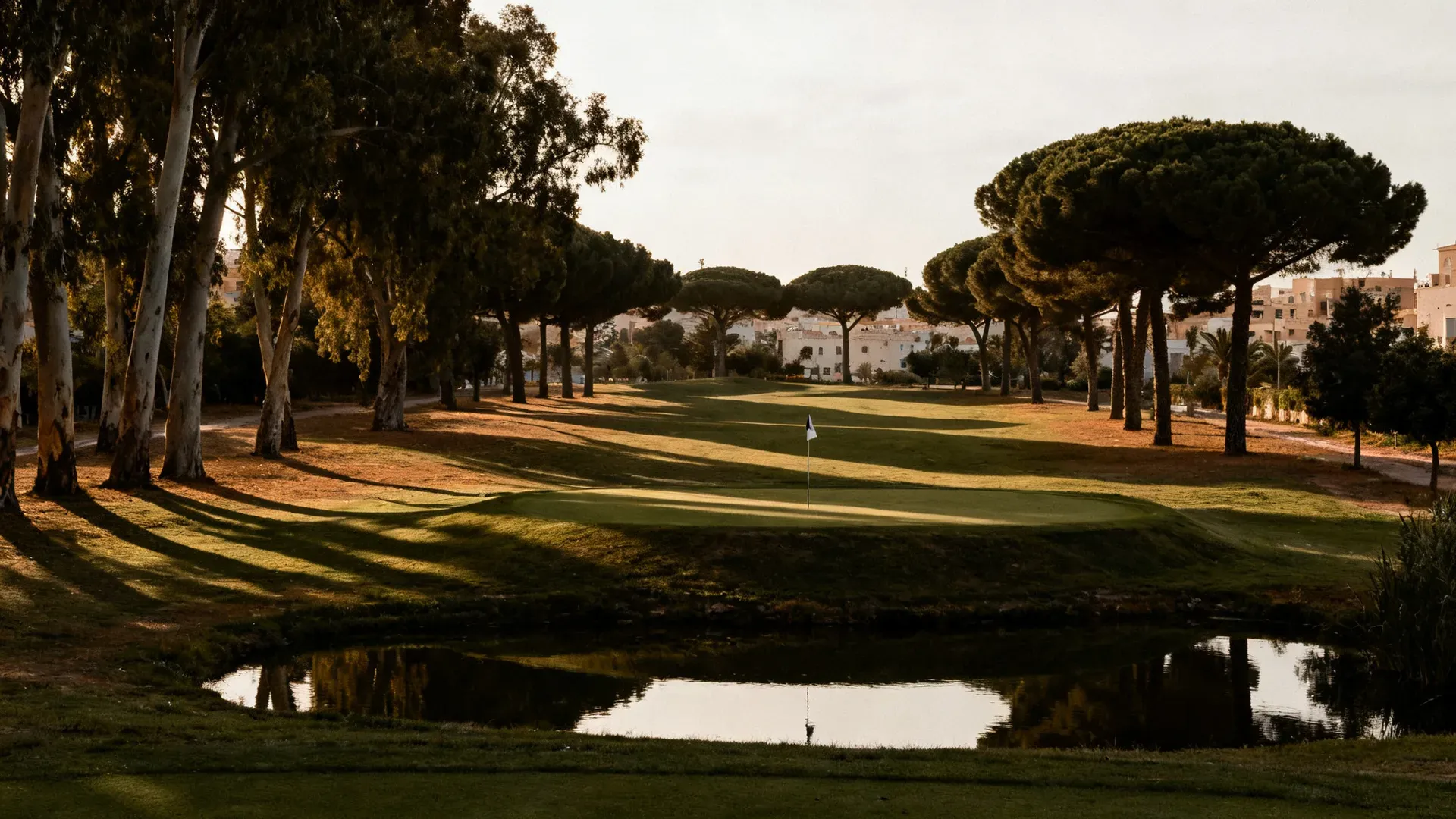
Raised green behind a small pond, eucalyptus and umbrella pines casting long shadows, pale houses beyond

The Residence Golf Course

  • Architect: Robert Trent Jones II
  • Opened 2008
  • 18 holes
  • Par 72

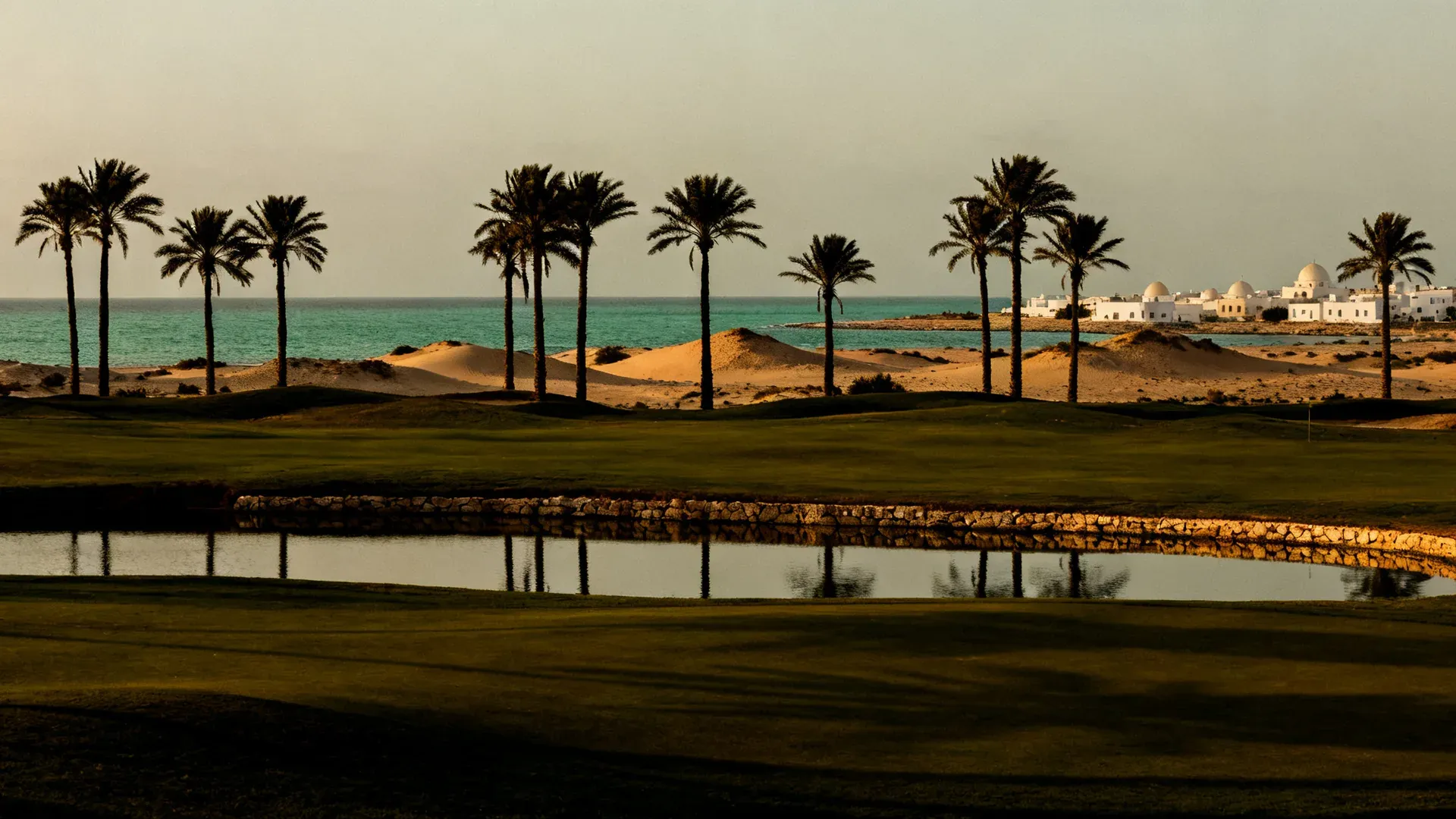
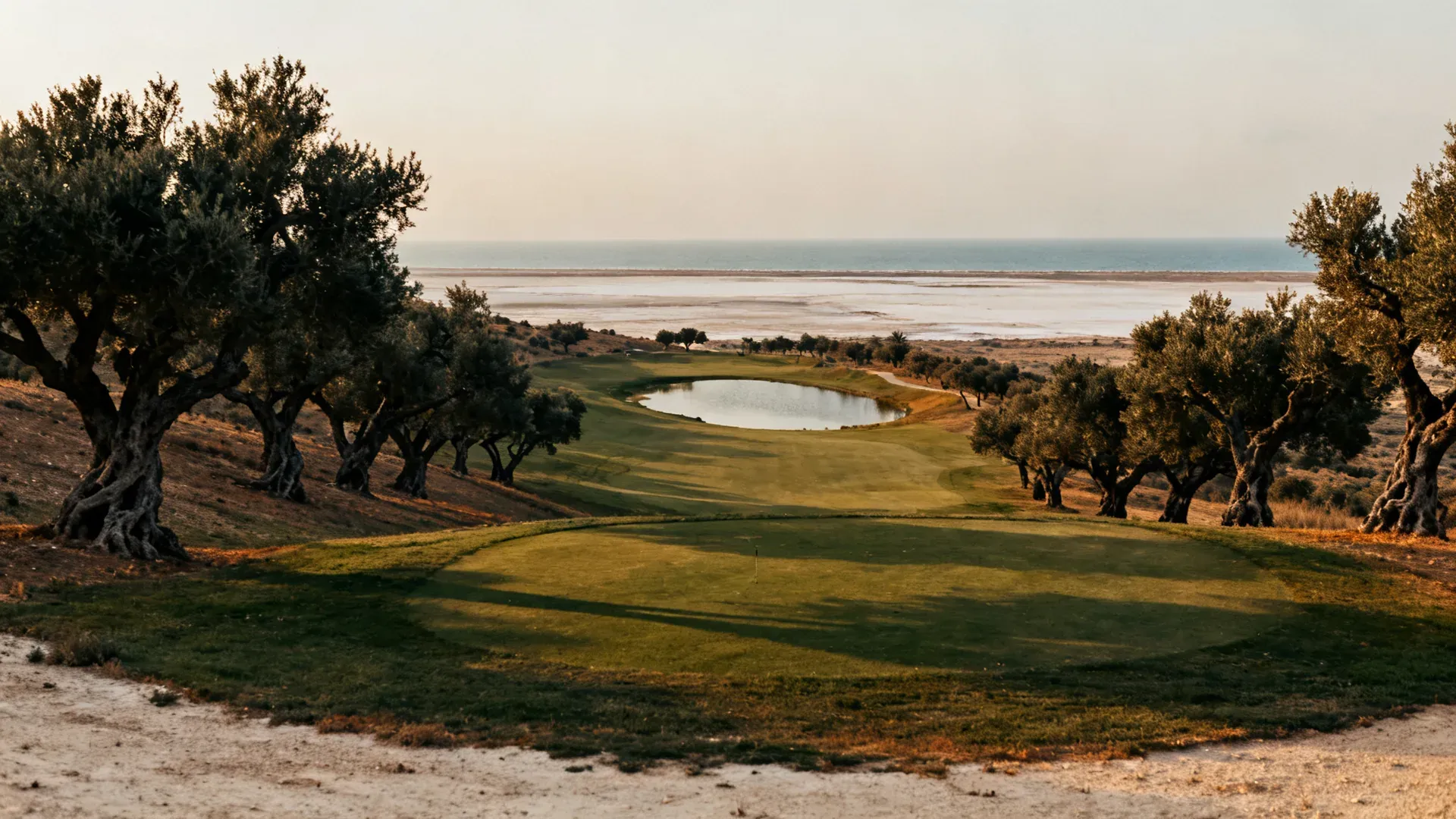
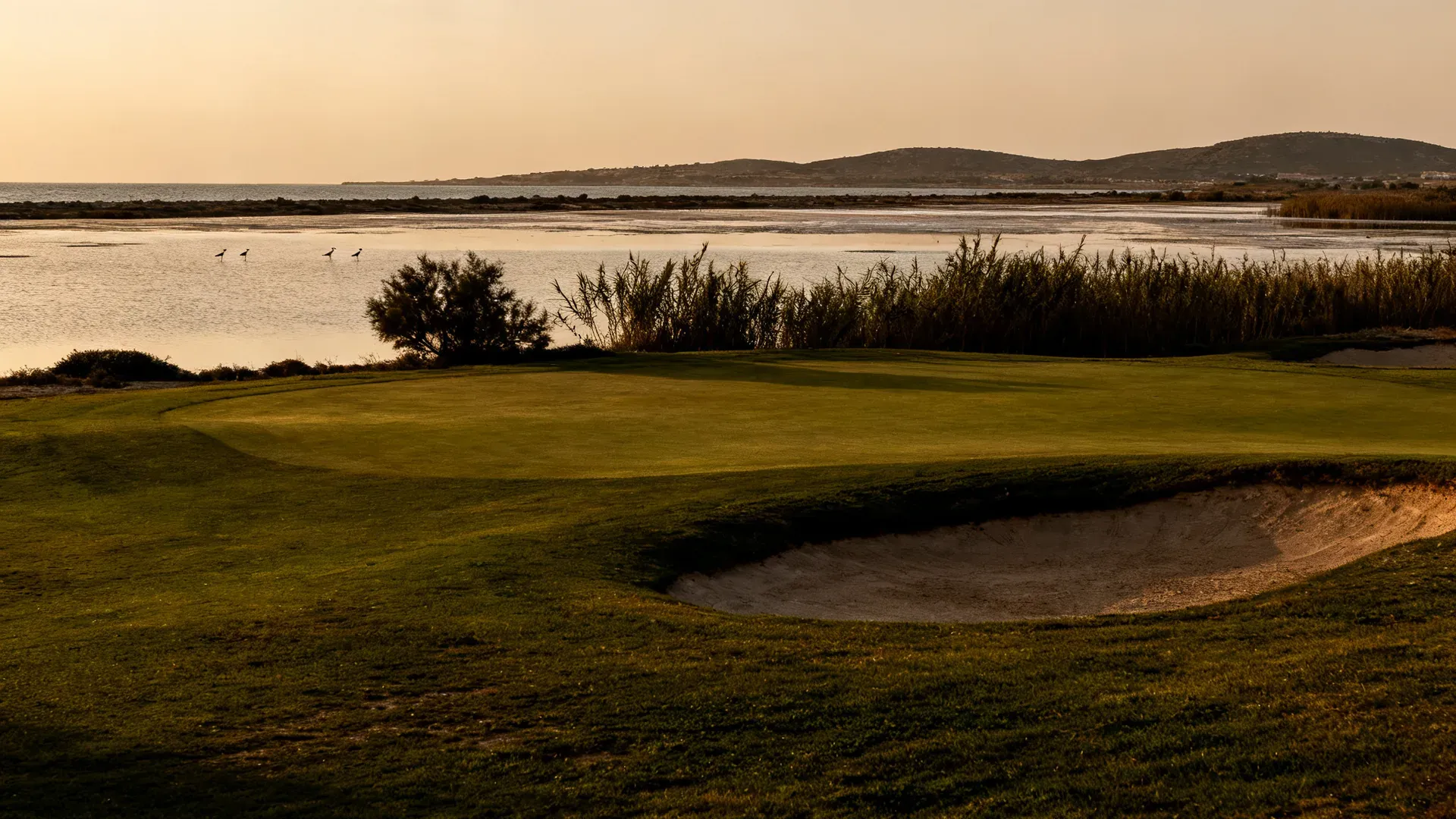
Inaugurated in October 2008, this is Robert Trent Jones II's first course in North Africa: a par 72 of 6,451 metres set between the Mediterranean and the Sebkha of Ariana, a salt lake at the heart of a nature reserve on the migratory bird route. Both nines return to the clubhouse. The front nine circles a residential district, with two consecutive par 5s, the 3rd and 4th, on either side of a small lake; the back nine opens onto the flat ground beside the lagoon, which holes 12 to 14 run along. Five par 5s and water everywhere: the demanding course of the trip.

Signature hole. The 7th, a par 3 played beside the salt lake, is the hole everyone photographs; the 18th, a par 5 doglegging left, brings you back to the clubhouse.

Official website
Golf de Carthage

  • Opened 1927
  • 18 holes
  • Par 66

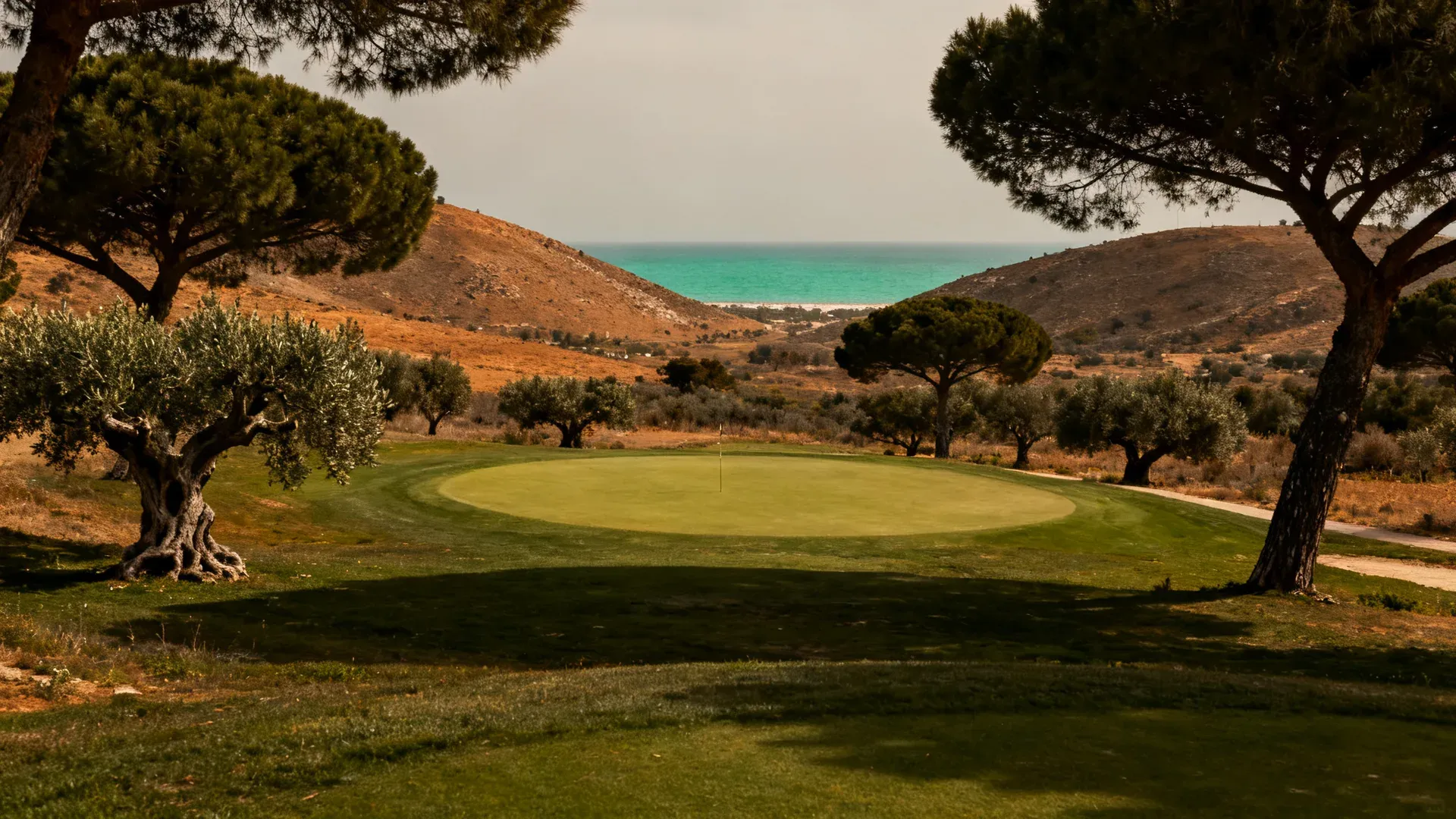
Founded in 1927 at La Soukra, this is Tunisia's oldest golf club, since reworked by the French architect Yves Bureau. The course fits into 29 hectares, among century-old eucalyptus and pines, surrounded on all sides by houses: a par 66 of 4,524 metres, made up of twelve short par 4s and six par 3s. Do not trust the scorecard: the fairways are tight, several raised greens hide behind ponds near the clubhouse, and precision counts for more than length. Ideal for a first afternoon, less than ten minutes from the airport.

Signature hole. The three-tiered green on the 14th is the most elaborate on the course: depending on the pin position, reading the putts becomes a real puzzle.

Where to stay

The Residence Tunis

The golf hotel of Tunis, on a beach on the Côtes de Carthage near Gammarth, about ten minutes' drive from its course. The architecture draws on Arab-Andalusian heritage, and the 4,000 m² thalassotherapy centre, designed like Roman baths, is a fine way to end the day. The golf clubhouse, with restaurant, bar and pool, belongs to the same house.

Maison Dedine

A five-room boutique hotel clinging to the hillside of Sidi Bou Said, facing the Bay of Tunis. Its owner, Saad Eddine Sinaoui, a painter and sometime sailor, designed it himself like a boat resting on the sea and spent seven years building it; each room bears the name of a family member. A twelve-metre lap pool runs along the façade, facing the horizon.

Dar El Jeld Hotel & Spa

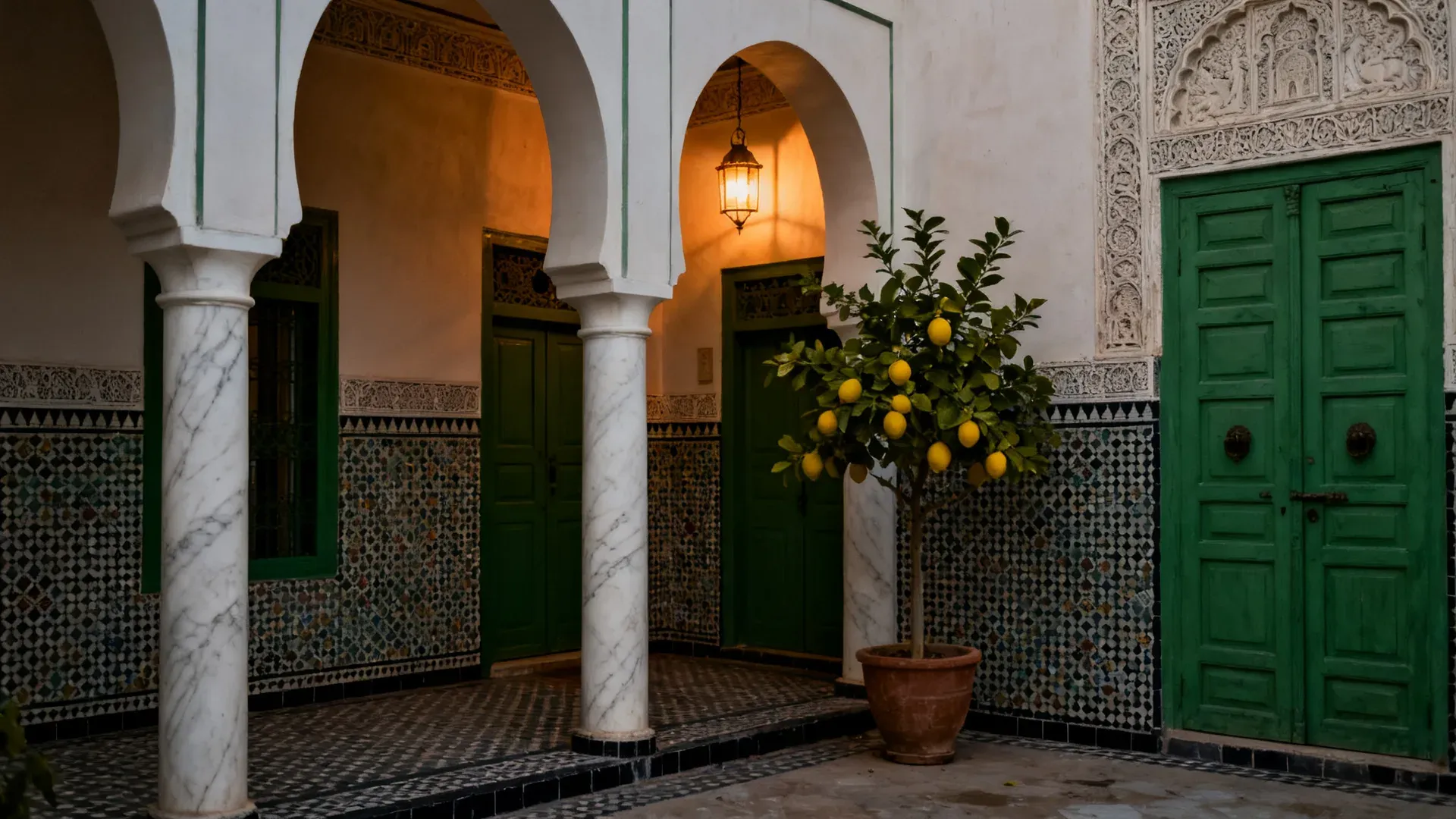
Sixteen suites in a fully restored old mansion in the medina, a stone's throw from the Kasbah and at the entrance to the souks. Rooms of 65 to 95 m² opening onto a patio, a lemon-tree garden, a spa with hammam and a rooftop above the old town. The address for those who want to wake up in the medina and drive twenty minutes or so to the golf.

Patio of a traditional house with marble columns and arches, tiled walls, green doors and a potted lemon tree

Where to dine

Restaurant Dar El Jeld

Directly opposite the hotel of the same name, Dar El Jeld restaurant presents itself as the oldest and most renowned table for traditional Tunisian cooking in the city, in a medina house. Open for lunch and dinner, closed on Sundays: book for dinner, then go up for a drink on the rooftop.

Le Golfe

A La Marsa institution since 1955, once called Le Cabanon: a beach house with a terrace facing the sea, where the Mediterranean cooking follows the seasons, from sea bream tartare to spaghetti with bottarga. Open every day from noon to midnight; booking is recommended.

Beyond golf

The medina of Tunis

Inscribed on the UNESCO World Heritage List in 1979, the medina grew up around the Zitouna Mosque, founded in the 8th century. Some 700 monuments, palaces, mausoleums, madrasas and fountains, are spread among its lanes. You enter through the Porte de France, lose yourself in the souks and finish on a rooftop terrace to watch the minarets at sunset.

Carthage and the Bardo Museum

The archaeological site of Carthage, also inscribed by UNESCO in 1979, stretches along the sea about fifteen kilometres from the centre: Byrsa Hill, the Punic ports, the Tophet and the Antonine Baths. The Bardo Museum, housed in a former beylical palace, holds one of the world's largest collections of Roman mosaics, including the famous mosaic of Virgil flanked by two Muses.

Sidi Bou Said

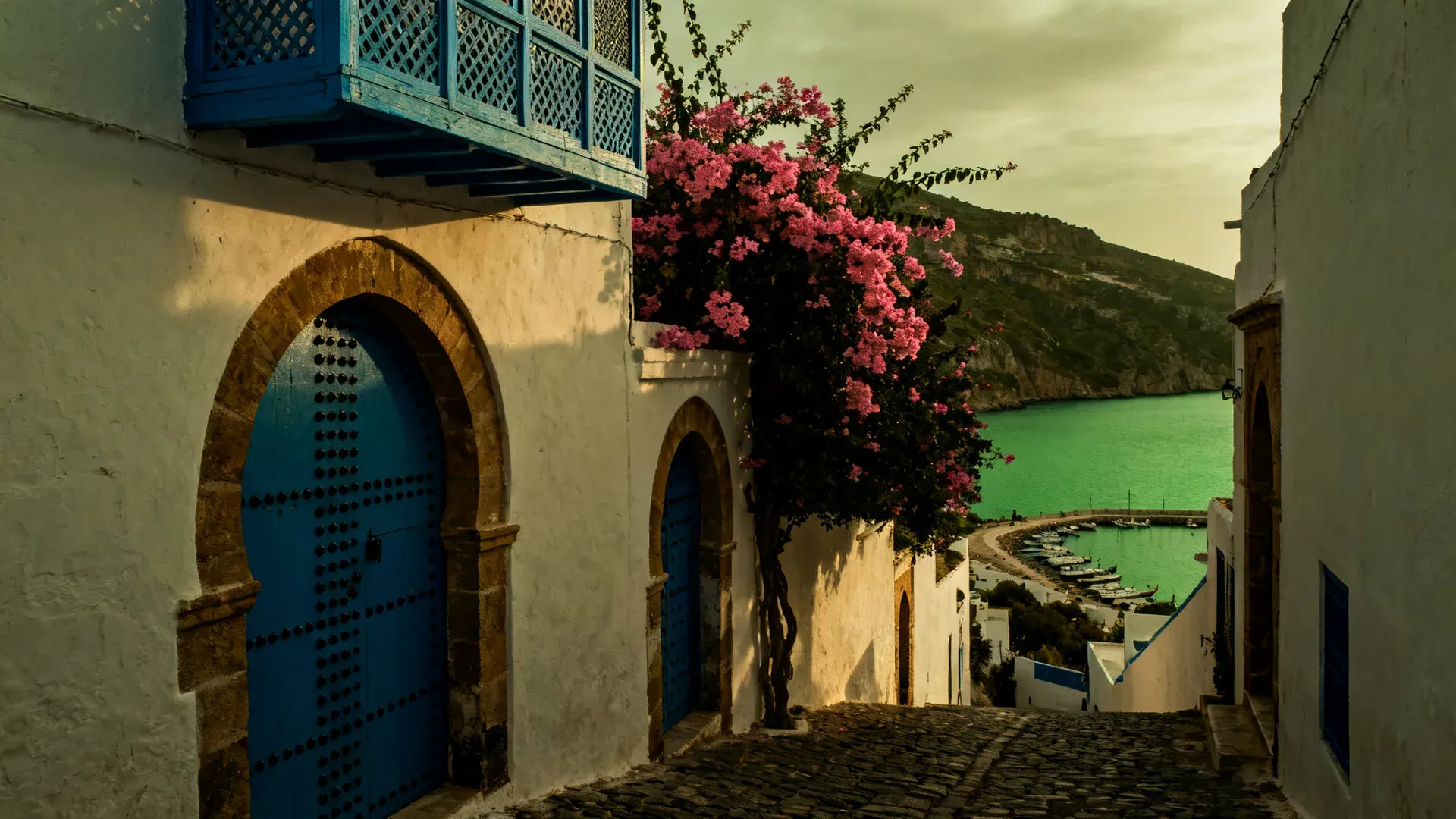
The white-and-blue village owes its colours to Baron Rodolphe d'Erlanger, who made them the rule in the 1920s; his residence, Ennejma Ezzahra, is now a museum hosting concerts of Arab and classical music. Paul Klee passed through in 1914. Climb to the Café des Délices for the view over the gulf, then walk down to the marina.

Cobbled lane in a white village, studded blue doors, a blue latticed balcony and bougainvillea, a marina below

When to go

Spring, from March to May, and autumn, in October and November, are the best seasons: highs range from about 19 to 27°C and the courses are pleasant all day. July and August average above 34°C and are played only early in the morning. Winter stays mild, around 16 to 18°C, but it is the rainy season: December and January see about eight days of rain a month.

Getting there

Tunis-Carthage airport (TUN) is about two hours' flight from Paris. It is less than ten minutes from Golf de Carthage and about twenty-five minutes from the medina, Gammarth and The Residence Golf Course. The TGM train links central Tunis with La Marsa via Carthage and Sidi Bou Said; for golf, a car with driver remains the simplest option.

Frequently asked questions

How many golf courses are there in Tunis?

Two 18-hole courses: The Residence Golf Course, near Gammarth, and Golf de Carthage, at La Soukra. The next nearest are those of Hammamet, about an hour's drive away.

What is the best golf course in Tunis?

The Residence Golf Course, a par 72 of 6,451 metres designed by Robert Trent Jones II and opened in 2008, between the sea and the Sebkha of Ariana. Golf de Carthage, a par 66 founded in 1927, is shorter and more technical.

Is Golf de Carthage the oldest golf club in Tunisia?

Yes. Founded in 1927 at La Soukra, north of Tunis, it is the country's oldest club. Its 18-hole, par 66 course was reworked by the French architect Yves Bureau.

When is the best time to play golf in Tunis?

From March to May and in October and November, with highs of 19 to 27°C. Summer exceeds 34°C, and the mild winter is the wettest season.

Where should I stay for a golf trip to Tunis?

On the northern coast, between La Marsa, Sidi Bou Said and Gammarth, ten to twenty minutes from both courses. The Residence Tunis is the golf hotel; the medina is also an option, twenty to thirty-five minutes from the tees.

Tailor-made

Your golf trip: Tunis

Tee times, suites, transfers and tables: your concierge replies within 24 hours with a proposal shaped around you.

Explore: Tunisia →