Golf guide • Spain • Catalonia

Golf in Barcelona: Vallès pinewoods, sea-view fairways and city nights

Barcelona is played from the city: Real Club de Golf El Prat, 45 holes designed by Greg Norman at Terrassa and ten times host of the Spanish Open, Terramar, laid out by Tom Simpson in 1922 beside the sea at Sitges, and Sant Cugat, the senior club of Catalonia, are all within an hour of the centre. Golfers come to combine traditional golf with a cultural capital, ideally in spring and autumn.

Plan this tripUpdated

Barcelona is not a golf resort, and that is the whole point: you sleep in the Eixample, dine in one of the great food cities of Europe, and head out each morning to a different course. To the north, the Vallès lines up Sant Cugat and El Prat at the foot of wooded massifs; to the south, the Garraf coast leads to Terramar and Sitges. Three old clubs, three quite distinct characters, and journeys of no more than three-quarters of an hour from the Passeig de Gràcia.

Catalan golf is a matter of private clubs rather than tourist resorts. El Prat was born in 1912 and has moved twice, the last time to make way for the airport; Sant Cugat came into being with the company that electrified the valley railway; Terramar is celebrating its centenary. All welcome visitors by reservation, with the blend of formality and simplicity peculiar to old clubs. Between tee times, the scent of sun-warmed pines follows you down the fairways.

Three to five nights are enough: one course a day, the Sagrada Família or the Barri Gòtic in the afternoon, a great table in the evening. Those who want to continue to the Costa Brava will find Pals and the Empordà in our Girona guide, an hour and a half to the north.

The courses

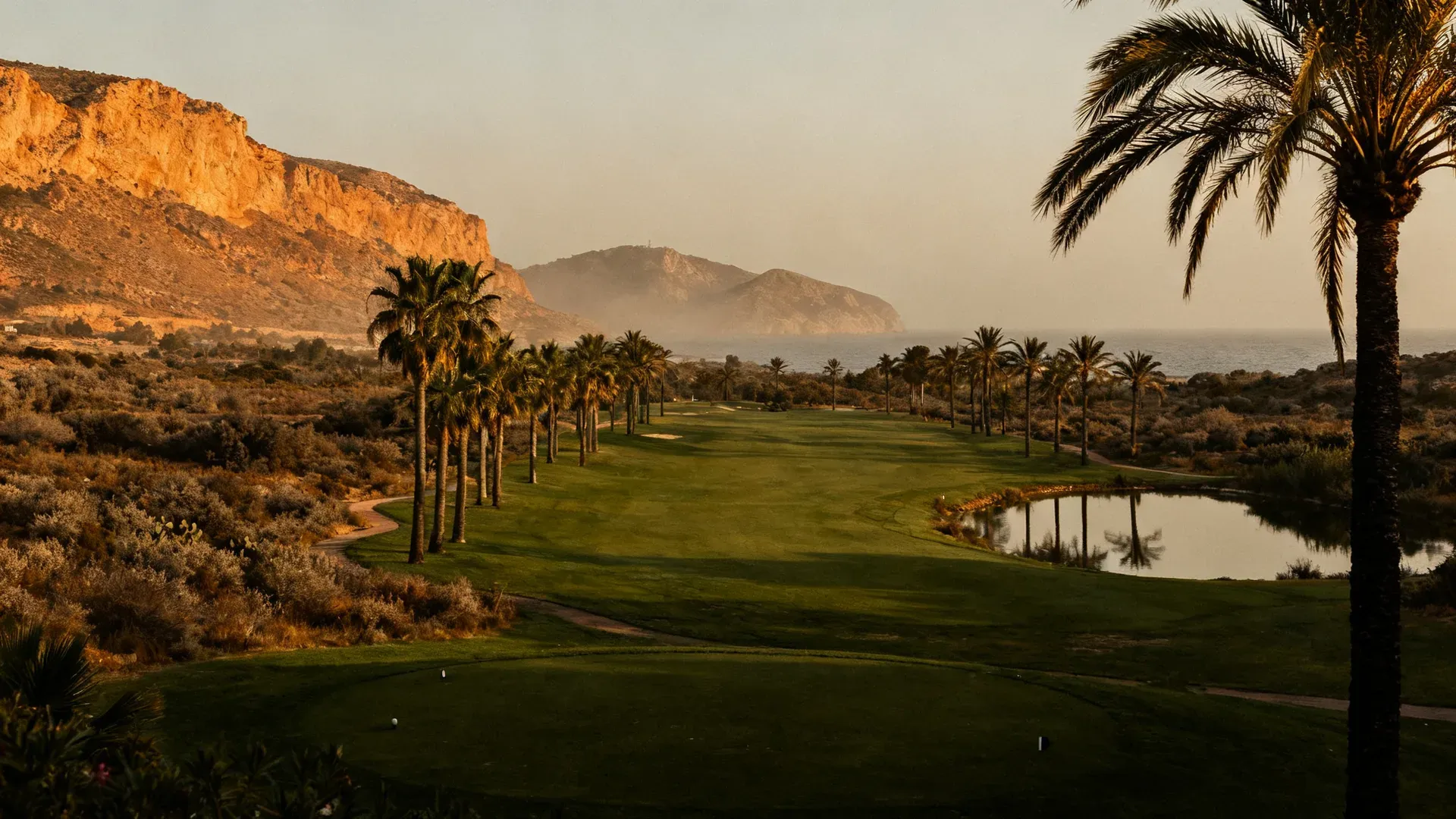
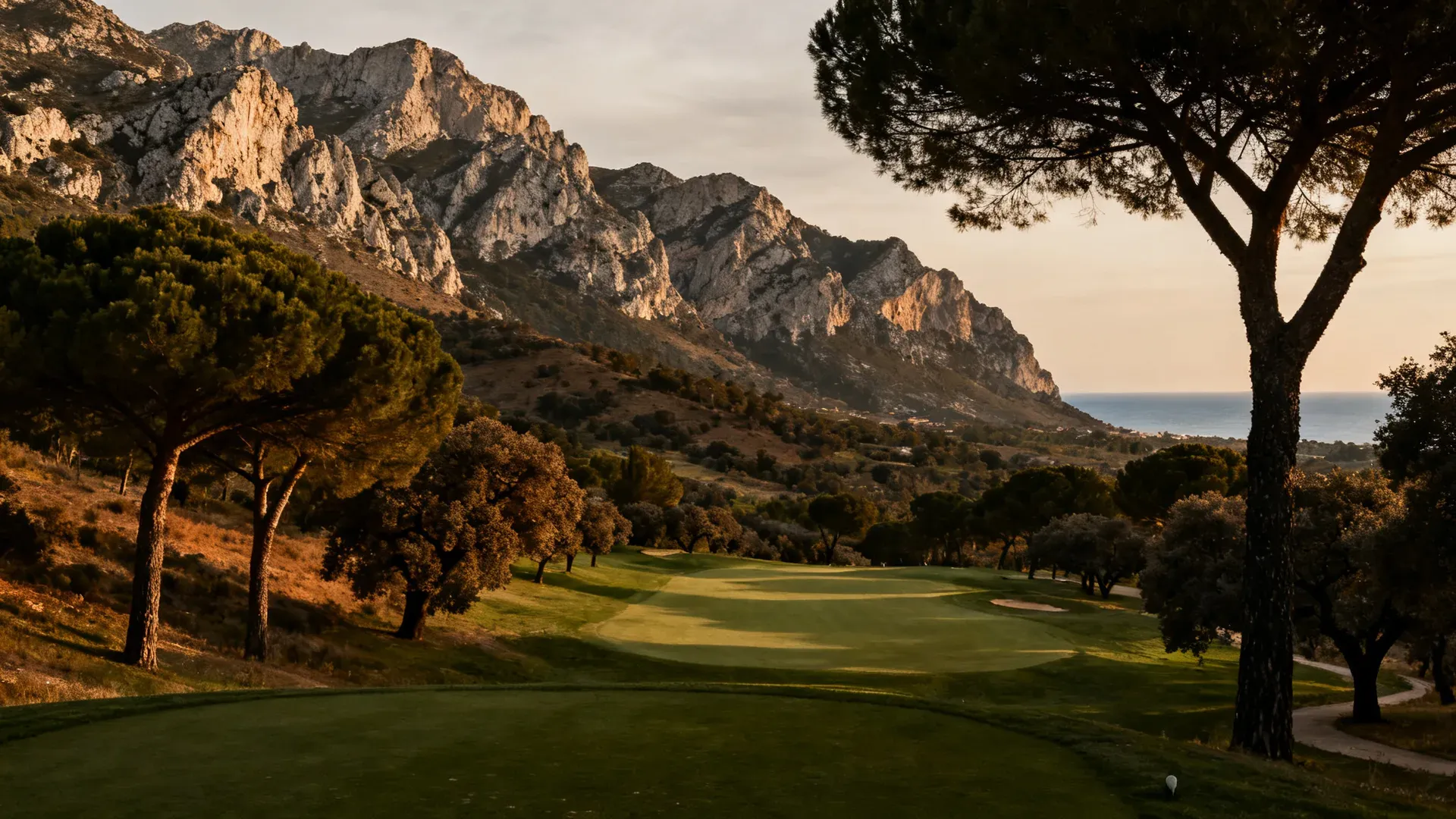
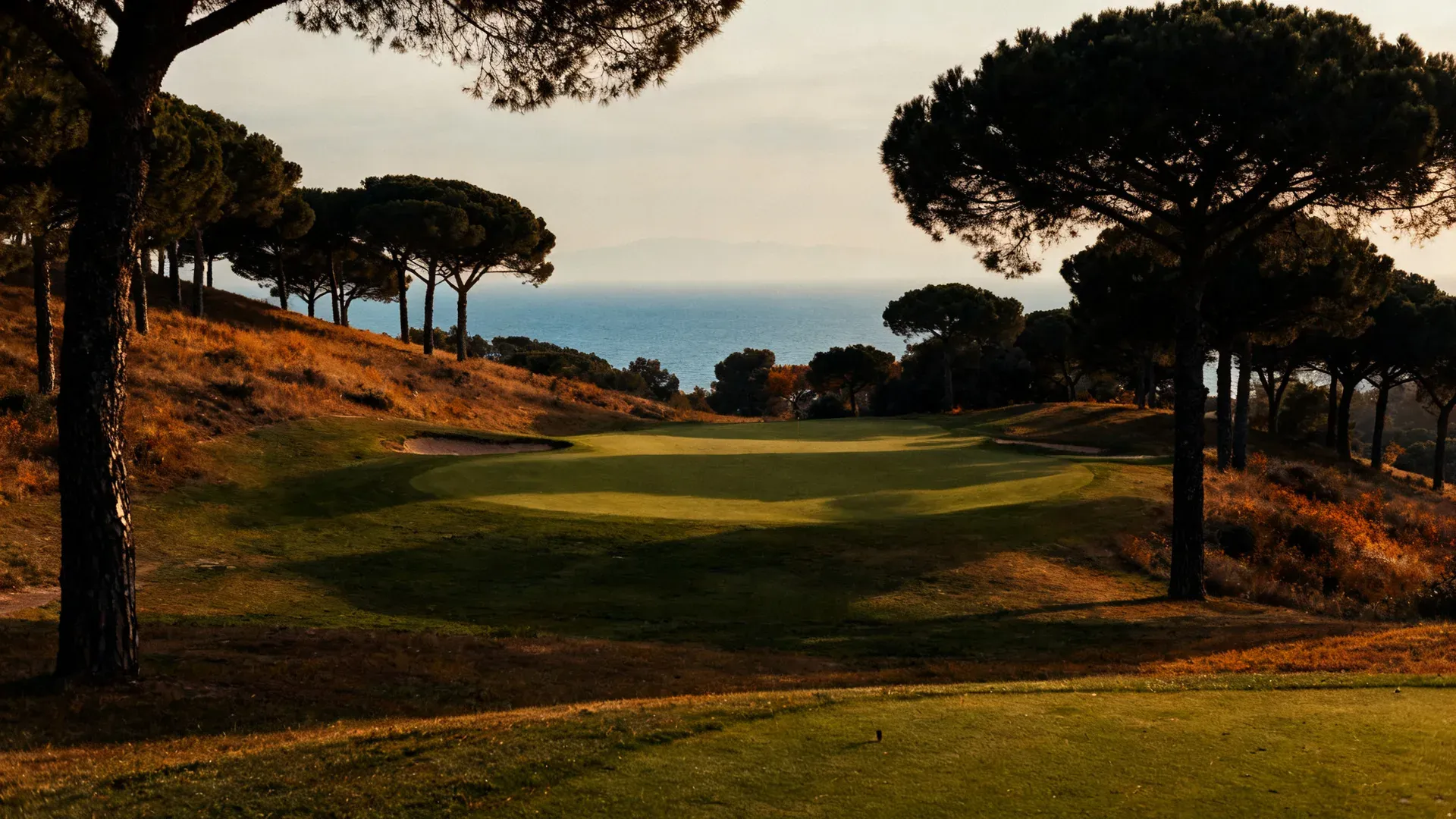
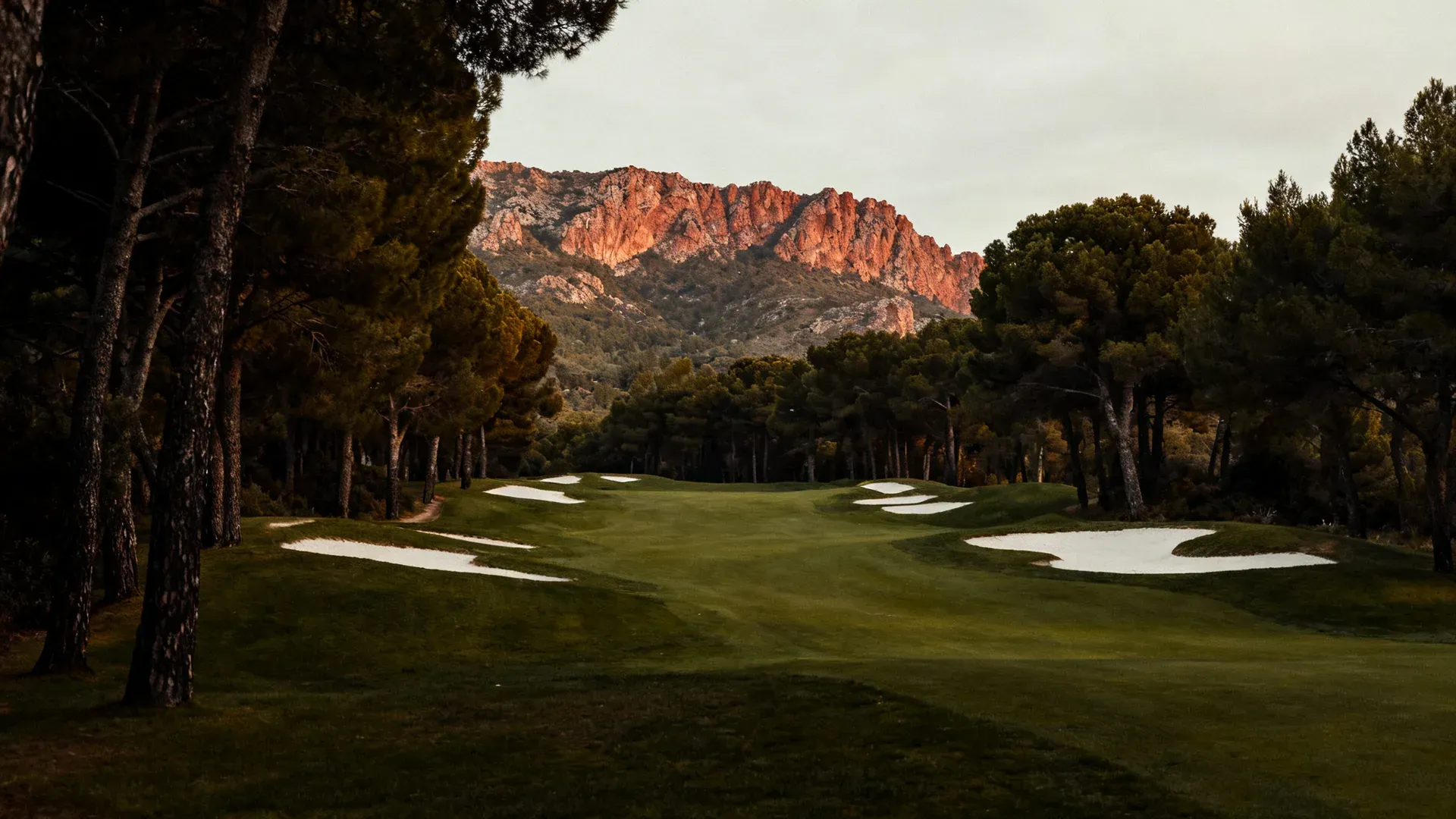
Fairway lined with white bunkers in a pinewood, rocky cliffs glowing red at sunset in the background

Real Club de Golf El Prat (Rosa)

  • Architect: Greg Norman
  • Opened 2003
  • 18 holes
  • Par 72

Founded in 1912, Real Club de Golf El Prat left its historic site near the airport in 2003 for the hills of Terrassa, some thirty kilometres north of the city. Greg Norman designed 45 holes here: the eighteen-hole Rosa and Amarillo, plus a nine-hole course, the Verde. The Rosa, a par 72 of 6,465 metres from the back tees, is the championship course: a fairly flat front nine through mature pinewood and a more open, rolling back nine, with views of the Sant Llorenç del Munt natural park. The club has hosted the Spanish Open ten times. A benchmark for good players, demanding but fair.

Signature hole. The 11th, a long and much-feared par 3, is often cited as one of the hardest holes on the course; the 6th, another par 3, plays over a veritable sea of sand.

Official website
Club de Golf Terramar

  • Architect: Tom Simpson; Jim Fazio (1993)
  • Opened 1922
  • 18 holes
  • Par 72

The most storied of Barcelona's coastal courses is at Sitges, some forty kilometres to the south-west. Tom Simpson laid out the first holes in 1922; Jim Fazio redesigned it in 1993 and the Mackenzie & Ebert practice has renovated it since. Par 72, 6,095 yards from the white tees: the length is modest, but the railway line that cuts through the estate, the four inland lakes and the coastal pines call for precision. A relaxed, sunlit round, perfect for a first day or an afternoon before dinner in Sitges.

Signature hole. The 3rd, a par 3 named "Mediterráneo", finishes on a raised green guarded by bunkers on either side, facing the sea.

Official website

Club de Golf Sant Cugat

  • Architect: Harry Colt; Javier Arana
  • 18 holes
  • Par 70

The club presents itself as the senior club of Catalonia: its story begins in 1914, when the Barcelona Traction company of the Canadian Frederick Stark Pearson was electrifying the valley's railway line. Harry Colt is credited with the original layout; devastated during the Civil War, the course was rebuilt by Javier Arana in the 1940s. A par 70 of 5,211 metres, with only two par 5s and several short par 4s, it rewards method more than power. Twenty-five minutes from the centre, it is the ideal round for a half-day.

Official website

Where to stay

Hotel Casa Fuster

At the top of the Passeig de Gràcia, the Casa Fuster was designed in 1908 by Lluís Domènech i Montaner, a master of Catalan modernisme. A member of the Leading Hotels of the World, it has a pool on its roof, the Terraza Mirador. Arrive on a Thursday: the Café Vienés holds its jazz club from 9 to 11 pm.

Casa Mathilda

A guesthouse on the principal floor of a building on Carrer de Roger de Llúria, in the heart of the Eixample, a few minutes' walk from the Passeig de Gràcia. Assumpta Baldó named it after her mother and receives guests as she would in a family home. Ask for a room facing the terrace, quieter than those on the street, and take breakfast at leisure: Sant Cugat is only twenty-five minutes' drive away.

Hotel Brummell

Twenty rooms behind an 1870 façade in Poble Sec, at the foot of Montjuïc and a fifteen-minute walk from the centre. Architect Inma Rábano restored it and the Blankslate studio fitted it out in the spirit of Geoffrey Bawa's tropical modernism, with a pool and a sauna. Ask for the penthouse, right at the top: a private terrace and an outdoor bathtub. The vermouth bars of the Paral·lel are round the corner.

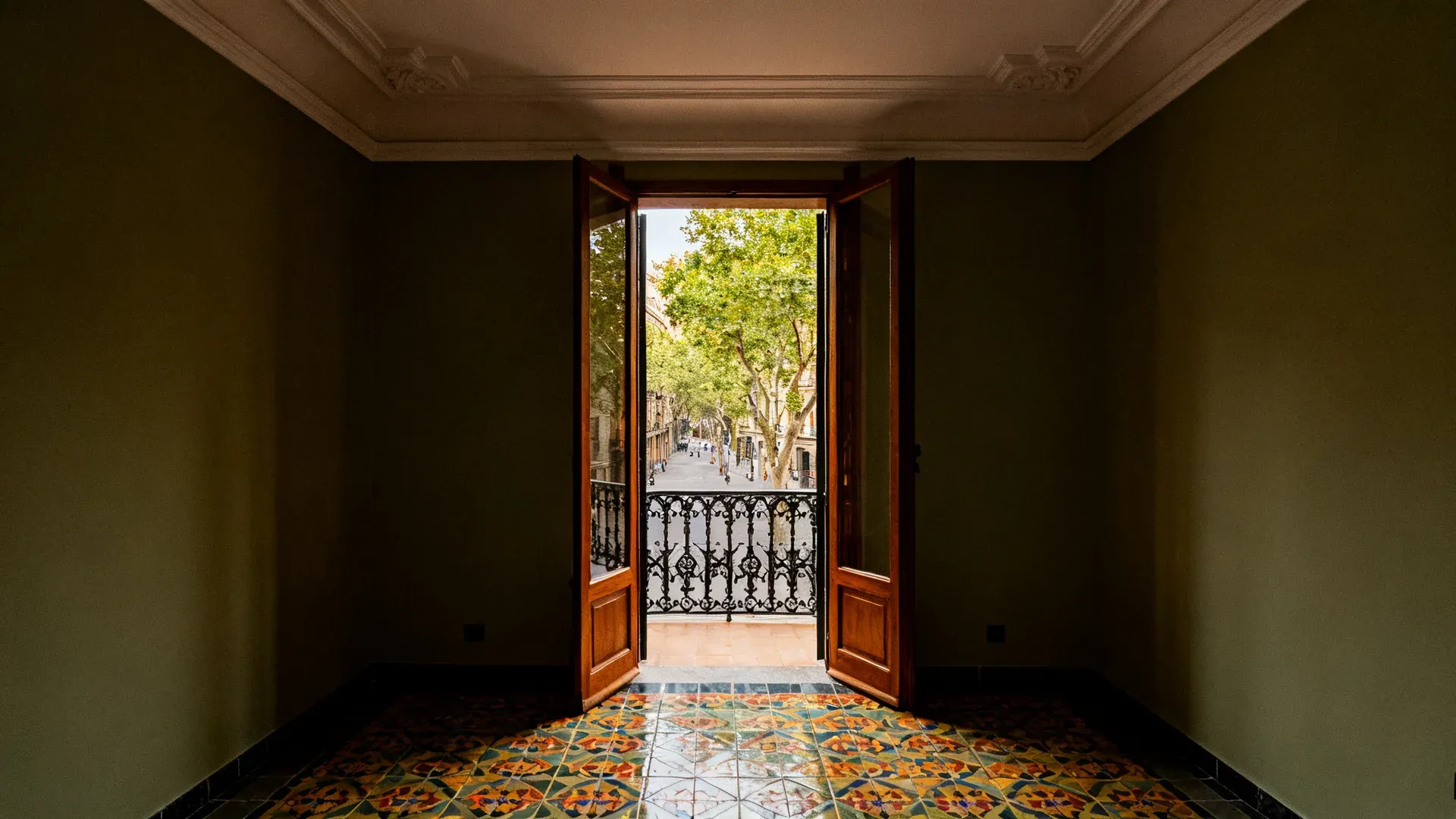
High-ceilinged room with mouldings and colourful encaustic tiles, French window open onto a balcony and a tree-lined street

Where to dine

Disfrutar

Three Michelin stars, opposite the Mercat del Ninot in the Eixample. Eduard Xatruch, Oriol Castro and Mateu Casañas, who trained under Ferran Adrià at El Bulli, offer two menus: Classic, which revisits the creations that became signatures, and Festival, made up of the year's new creations. The house advises choosing without reading the details of the dishes; on a first visit, take the Classic. Let us know as soon as your dates are set.

Cal Pep

On the small Plaça de les Olles in the Born, Josep Manubens, known as Pep, runs a counter of some twenty stools where locals queue before opening. There is no menu: the counter chooses for you from the day's fish and shellfish, much of it cooked on the plancha in front of you. Ask for the clams with ham, the trifàsic of fried fish and the tortilla. The counter cannot be booked: in the evening, be there before 7.30 pm; closed on Sundays.

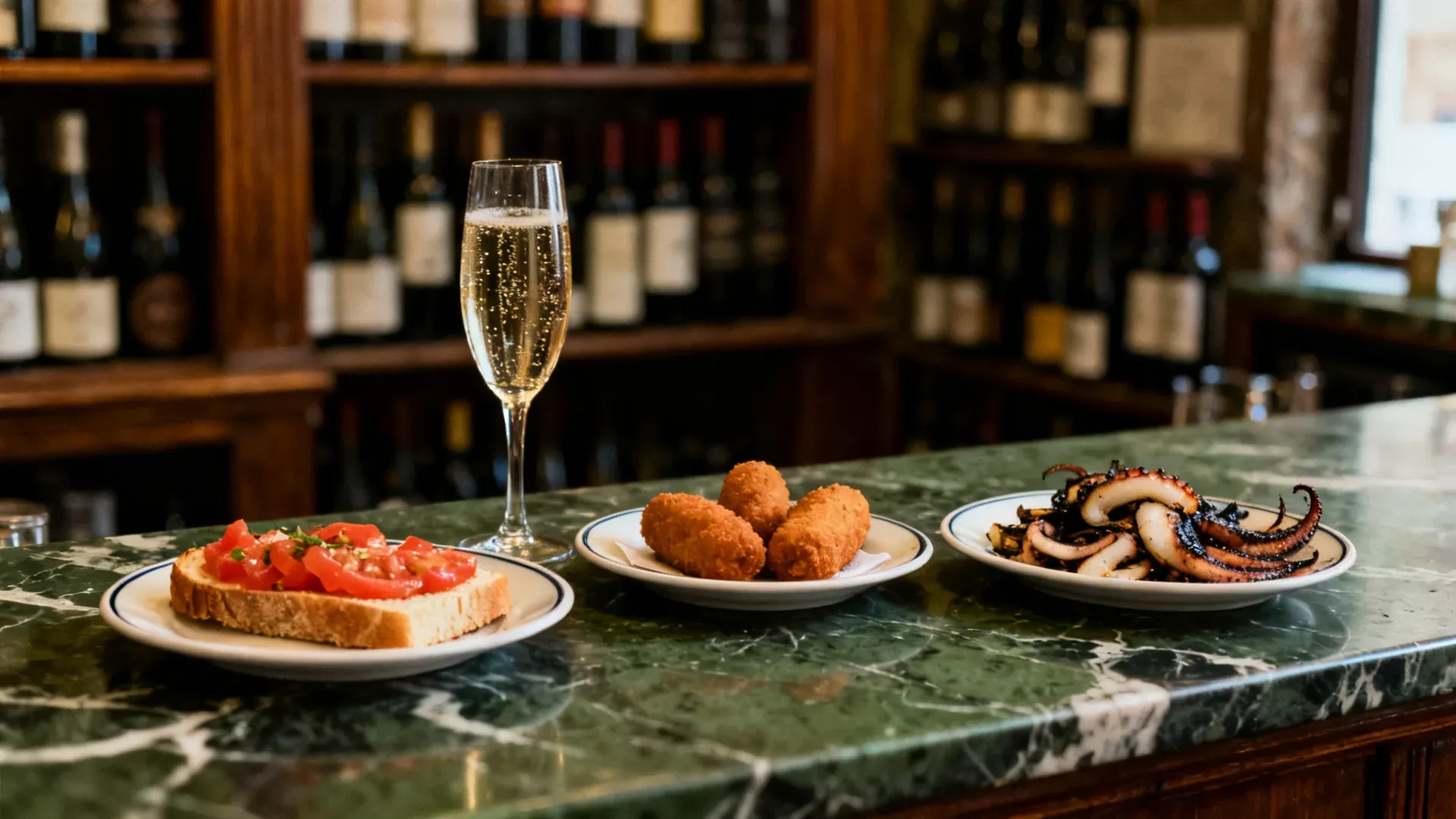
Bread with tomato, croquetas and grilled octopus on a green marble counter, a glass of cava and bottles behind

Beyond golf

Gaudí and Modernisme

Seven works by Antoni Gaudí are UNESCO World Heritage Sites, including Park Güell, Casa Milà, Casa Batlló, and the Nativity façade and crypt of the Sagrada Família. Book tickets online and visit the basilica late in the afternoon, on your way back from golf, when the light streams through the western windows.

Montserrat

Some fifty kilometres north-west of Barcelona, the Benedictine abbey of Montserrat, founded in 1025, clings to a mountain of jagged rock. You go up by road, rack railway or cable car to see the Black Madonna, La Moreneta, and hear the Escolania, one of the oldest boys' choirs in Europe. An easy half-day to combine with El Prat, which lies in the same direction.

Sitges

The small seaside town of the Garraf, next to Terramar, is made for the end of the day: the seafront promenade, the church overlooking the beach and the white lanes of the old town. After an afternoon round, a fish dinner facing the Mediterranean spares you the drive back to Barcelona at rush hour.

When to go

Spring, from March to June, and autumn, from September to November, are the best seasons: mild temperatures, courses in good condition, and the city is more pleasant to explore on foot. July and August are hot and humid, and Barcelona very crowded: play the first tee time. The Mediterranean winter remains playable, with days often sunny but cool and greens sometimes slower.

Getting there

Barcelona-El Prat airport (BCN) is about fifteen kilometres from the centre, twenty-five minutes by taxi; a train serves Terminal 2 and the Aerobús links both terminals with the city. A hire car or a driver makes the journeys simpler: about twenty-five minutes to Sant Cugat, half an hour to Terrassa and forty minutes to Sitges from the centre.

Frequently asked questions

What is the best golf course near Barcelona?

The Rosa course at Real Club de Golf El Prat, at Terrassa, designed by Greg Norman. The club has hosted the Spanish Open ten times and welcomes visitors by reservation.

What are the oldest golf clubs in Barcelona?

Real Club de Golf El Prat was founded in 1912, Sant Cugat presents itself as the senior club of Catalonia with origins in 1914, and Terramar, at Sitges, was laid out by Tom Simpson in 1922.

Can you play golf in Barcelona without a car?

Not easily: the courses are twenty-five to forty minutes from the centre. A taxi, a driver or a hire car remains the simplest option.

When is the best time to play golf in Barcelona?

From March to June and from September to November. Summer is hot and the city very crowded; winter remains playable, cool but often sunny.

How many days do I need for a golf trip to Barcelona?

Three to five nights: El Prat, Terramar and Sant Cugat, one course a day, with time to explore the city in the afternoon.

Tailor-made

Your golf trip: Barcelona

Tee times, suites, transfers and tables: your concierge replies within 24 hours with a proposal shaped around you.

Explore: Spain →