Golf guide • Ireland • County Galway

Golf in Galway: the bay, the bogland and the Atlantic

Galway, on the west coast of Ireland, offers three courses less than half an hour from the city: The Hawthorn, laid out by Christy O'Connor Jnr on the Renville peninsula; Galway Golf Club at Salthill, facing the bay; and Bearna, on Connemara bogland. The Connemara links, designed by Eddie Hackett, is about an hour and a half's drive west. Golfers come for the Atlantic, a lively city and the oysters of the bay; the best season runs from May to September.

Plan this tripUpdated

At the head of the bay that bears its name, Galway holds the mouth of the Corrib, a short, powerful river running from Lough Corrib to the sea. The city has kept its grey stone lanes, its music pubs and a section of 16th-century wall, the Spanish Arch, beside the quays. To the west lies Connemara, a country of granite, bog and lakes; to the south, across the water, the limestone hills of the Burren close the horizon.

The golf follows this geography. On the eastern shore of the bay, The Hawthorn unfolds a championship course on the Renville peninsula. At Salthill, Galway Golf Club, founded in 1895, is where both Christy O'Connors learned the game. At Bearna, the course was cut from Connemara moorland. For links golf, you have to go on to Ballyconneely, beyond Clifden, about an hour and a half by road.

Four to six nights allow the three nearby courses to be played without hurry, a long day to be given to Connemara and another kept for the Aran Islands. Lahinch, further south in County Clare, has a guide of its own. The Atlantic wind changes quickly: always keep an extra layer and rain gear in the bag.

The courses

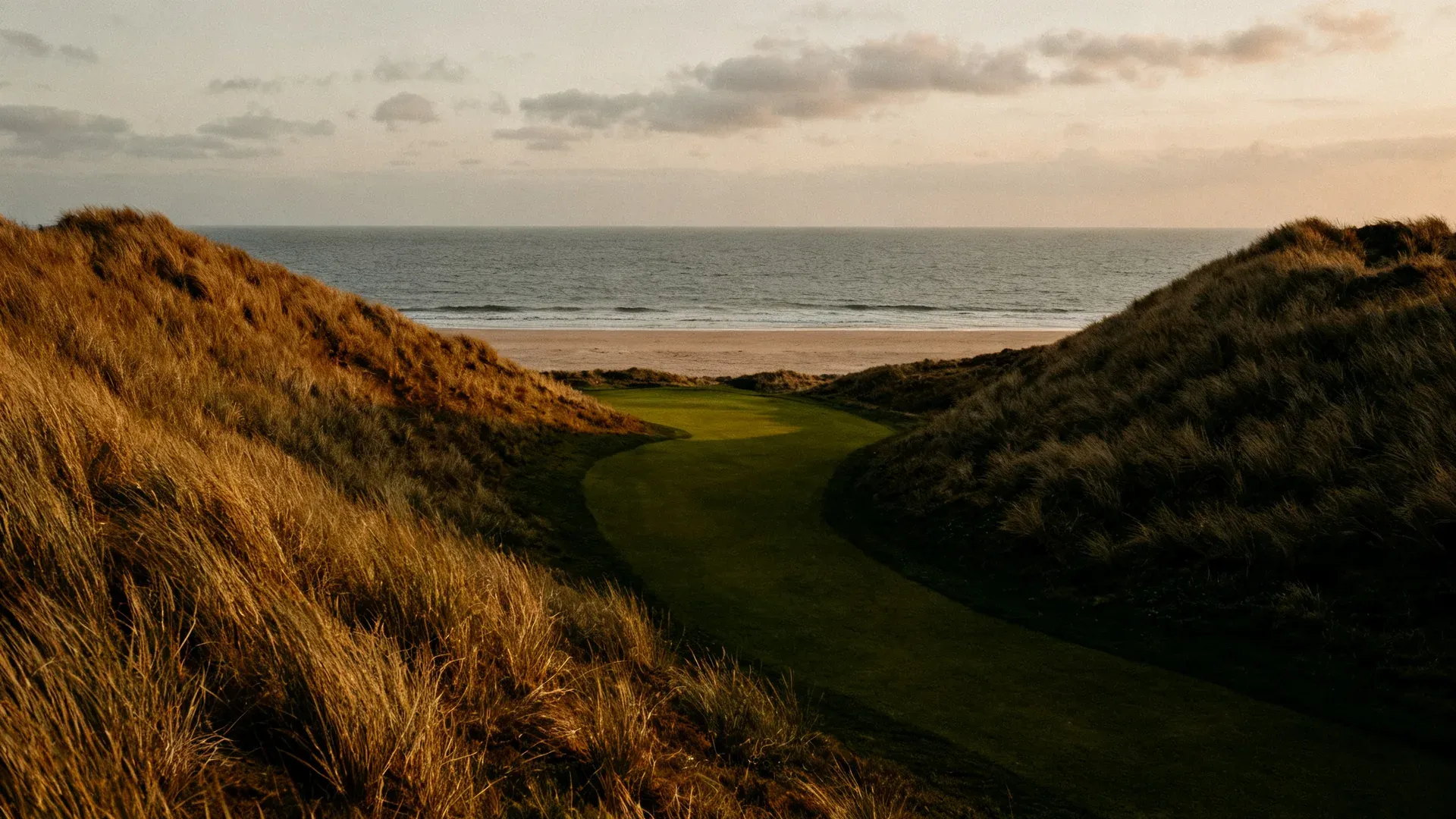
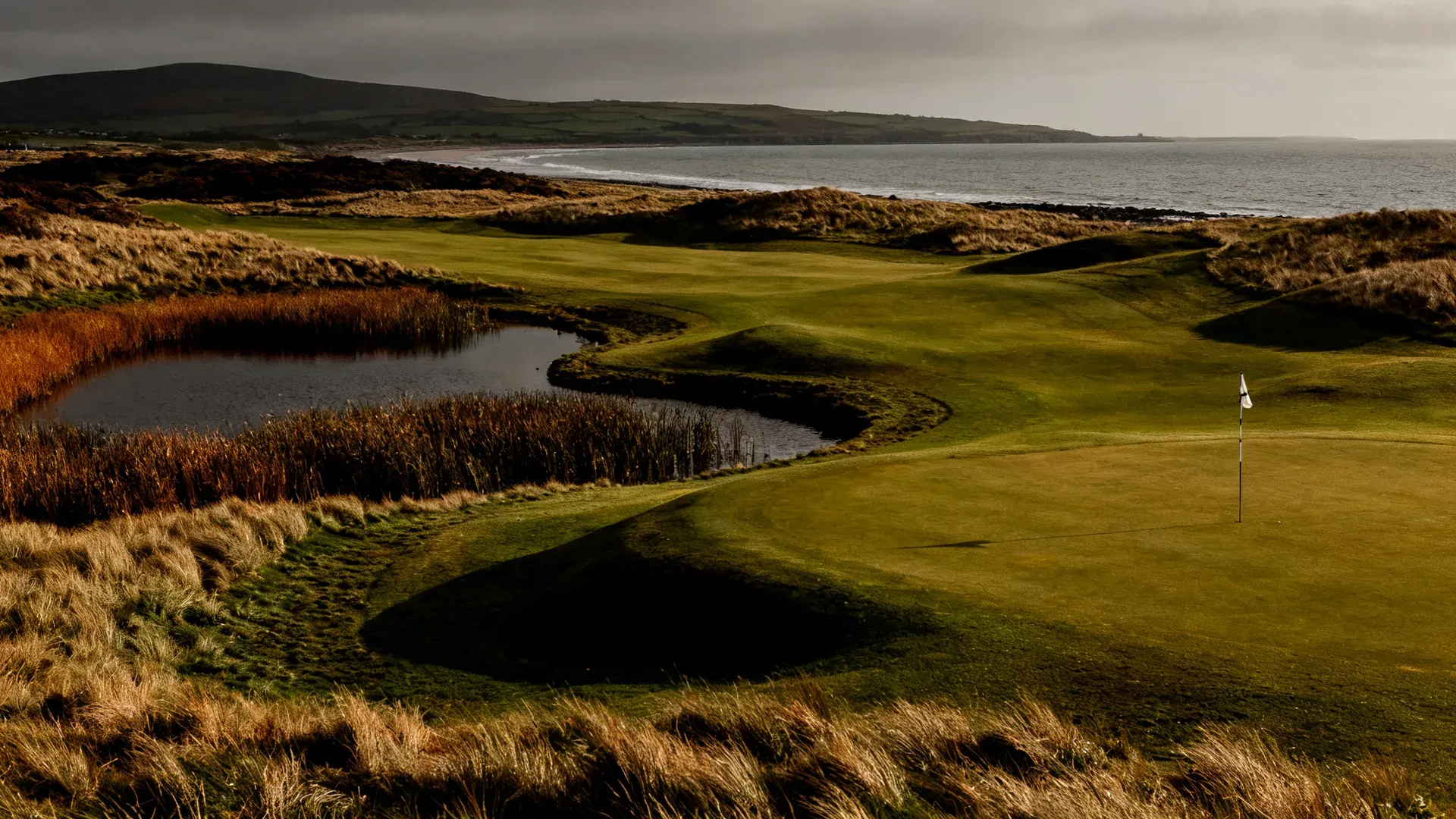
Links green between grassy dunes and a reed-fringed pond, a beach and hills in the distance under an overcast sky

The Hawthorn by Galway Bay

  • Architect: Christy O'Connor Jnr
  • 18 holes
  • Par 72

The course of the former Galway Bay Golf Resort, now attached to The Hawthorn hotel, occupies the Renville peninsula near Oranmore, about fifteen minutes from the centre of Galway. Christy O'Connor Jnr, the Galway-born Ryder Cup player, designed a par 72 of more than 7,300 yards from the back tees, with large, contoured greens and the bay visible from every hole. The ground rolls, the wind turns without warning, and forward tees make it accessible at every level. It hosted the West of Ireland amateur championship in 1999.

Official website
Galway Golf Club

  • 18 holes
  • Par 70

The city's oldest club, founded in 1895, settled at Blackrock, Salthill, in the mid-1920s; club tradition credits Alister MacKenzie with the siting of the tees and greens. It is a parkland course of 5,974 metres, par 70, lined with mature trees and gorse, with raised, multi-tiered greens. The first four holes run along the bay, with views of the Burren and the Aran Islands. Christy O'Connor Snr and his nephew Christy O'Connor Jnr grew up within a few wedge shots of the 7th tee. A course for precision, ten minutes from the centre.

Signature hole. To reach the first four holes, by the bay, you pass through a pedestrian tunnel under the road.

Official website

Bearna Golf Club

  • Architect: Robert J. Browne
  • Opened 1996
  • 18 holes

Opened in 1996 on 250 acres of moorland at Corboley, between Bearna and Moycullen, Robert J. Browne's course was cut from classic Connemara country: outcropping granite, bog, gorse and heather. Water comes into play on thirteen holes, bunkers are few, and the often-elevated tees look out over the bay, the Burren and the Aran Islands. The holes carry Irish names drawn from local wildlife and folklore. A course of character, about 6,800 yards long, some twenty minutes from Galway.

Connemara Championship Links

  • Architect: Eddie Hackett
  • Opened 1973
  • 18 holes

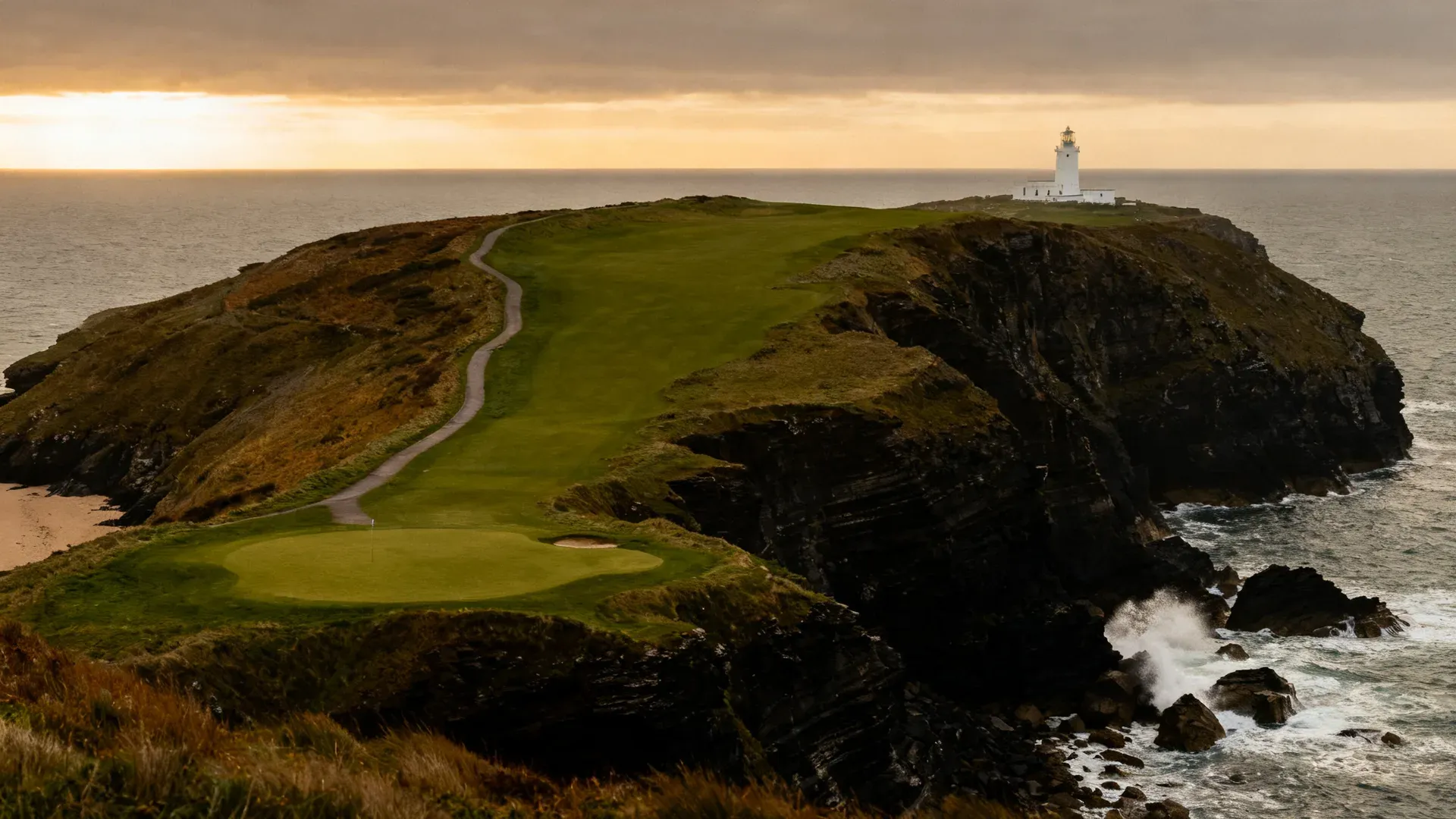
The county's only links, opened in 1973 at Ballyconneely, west of Clifden, grew out of the persistence of a young Clifden priest, Father Peter Waldron, in the late 1960s, and from Eddie Hackett's design. From the dogleg first to the spectacular closing stretch, you play facing Slyne Head lighthouse, the Atlantic and the peaks of the Twelve Bens. An additional nine holes, the Sea 9, were added in 2000. Allow about an hour and a half by road from Galway: this is a day out, or a night in Clifden.

Official website

Where to stay

The Hawthorn by Galway Bay

Opened in 2026 on Renville Point, Oranmore, the hotel is built around The Hawthorn course and looks out over the bay. A member of The Leading Hotels of the World, it brings together a spa with a thermal circuit, The Skylark restaurant, which cooks over wood fire, and The Oystercatcher bar. Ask for a bay-facing room and end the evening at The Oystercatcher, by the water. Galway is fifteen minutes away.

Glenlo Abbey Hotel & Estate

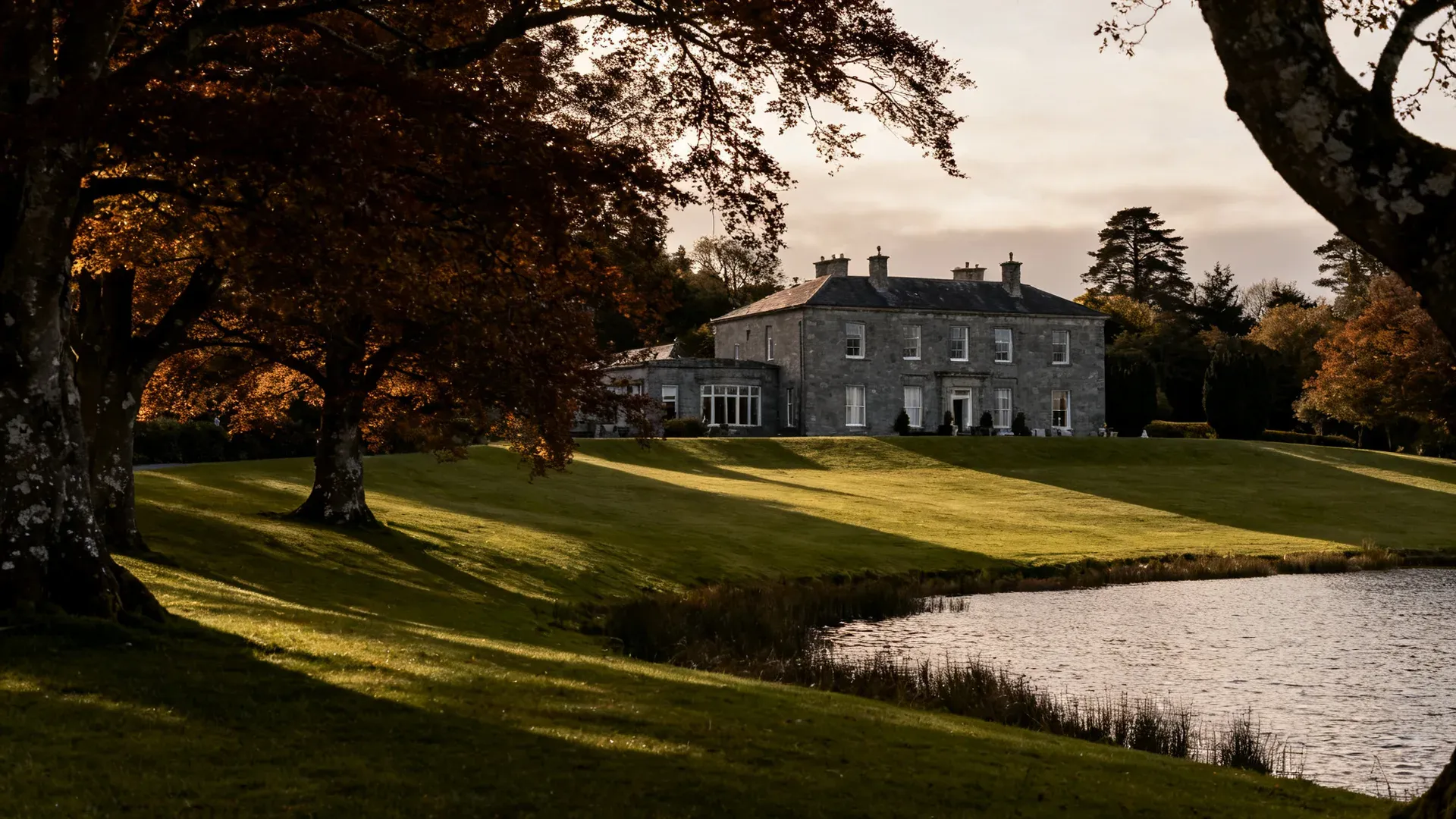
A house built in the 1740s on the shore of Lough Corrib, Glenlo Abbey spreads over 138 acres about three kilometres from Galway. The estate has its own nine-hole course and a 21-bay Trackman range for warming up before the big courses. Ask for a Lake View Deluxe room, on the lough side, and take an aperitif in the Ffrench Room before moving on to The Pullman.

The House Hotel

In the heart of the Latin Quarter, on Spanish Parade, a few steps from the Spanish Arch and Shop Street, this four-star boutique hotel has 48 boldly decorated rooms. Stay here to end the night in the pub, on foot. Worth knowing: there is no car park on site, but the Hynes Yard multi-storey, close by, offers guests a reduced rate. Salthill and Renville are a quarter of an hour away.

Grey stone country house on a lakeshore, a sloping lawn and tall beeches in autumn colours

Where to dine

The Pullman

At Glenlo Abbey, the restaurant occupies two Pullman carriages: Linda, from 1954, and Leona, from 1927, which ran on the Orient Express and in 1965 carried the remains of Winston Churchill. Chef Angelo Vagiotis, formerly of Noma, serves a seven-course tasting menu built on Irish produce, facing Lough Corrib. One Michelin star. Allow three hours and arrive half an hour early for an aperitif; closed on Mondays and Tuesdays.

Kai

On Sea Road, a few minutes' walk from the centre, Jess and Dave Murphy opened Kai in 2011 in a former florist's shop: stone floors, seasonal cooking, home-baked bread. At lunch, Tuesday to Saturday, there are no reservations: arrive at noon to be sure of a table. In the evening, a short, spot-on menu, and booking is essential. Listed in the Michelin Guide.

Moran's Oyster Cottage

On the inlet at The Weir, in Kilcolgan, the Morans have been pouring drinks since the 1760s; the seventh generation now runs the thatched cottage. Come for wild native oysters from Galway Bay, from September to April, then the chowder and the crab. No online booking: phone ahead. Closed on Mondays. On a fine day, take a table outside by the water. The Hawthorn is fifteen minutes away.

Beyond golf

The Aran Islands and Dún Aonghasa

The ferry leaves from Rossaveal, 37 kilometres west of Galway, with a shuttle bus from the city centre, and reaches the islands in about forty minutes, all year round. On Inis Mór, Dún Aonghasa, a dry-stone fort with concentric walls, stands on the edge of a cliff about a hundred metres high. Its earliest structures are thought to date from the Bronze Age, around 1100 BC.

The Spanish Arch and the Latin Quarter

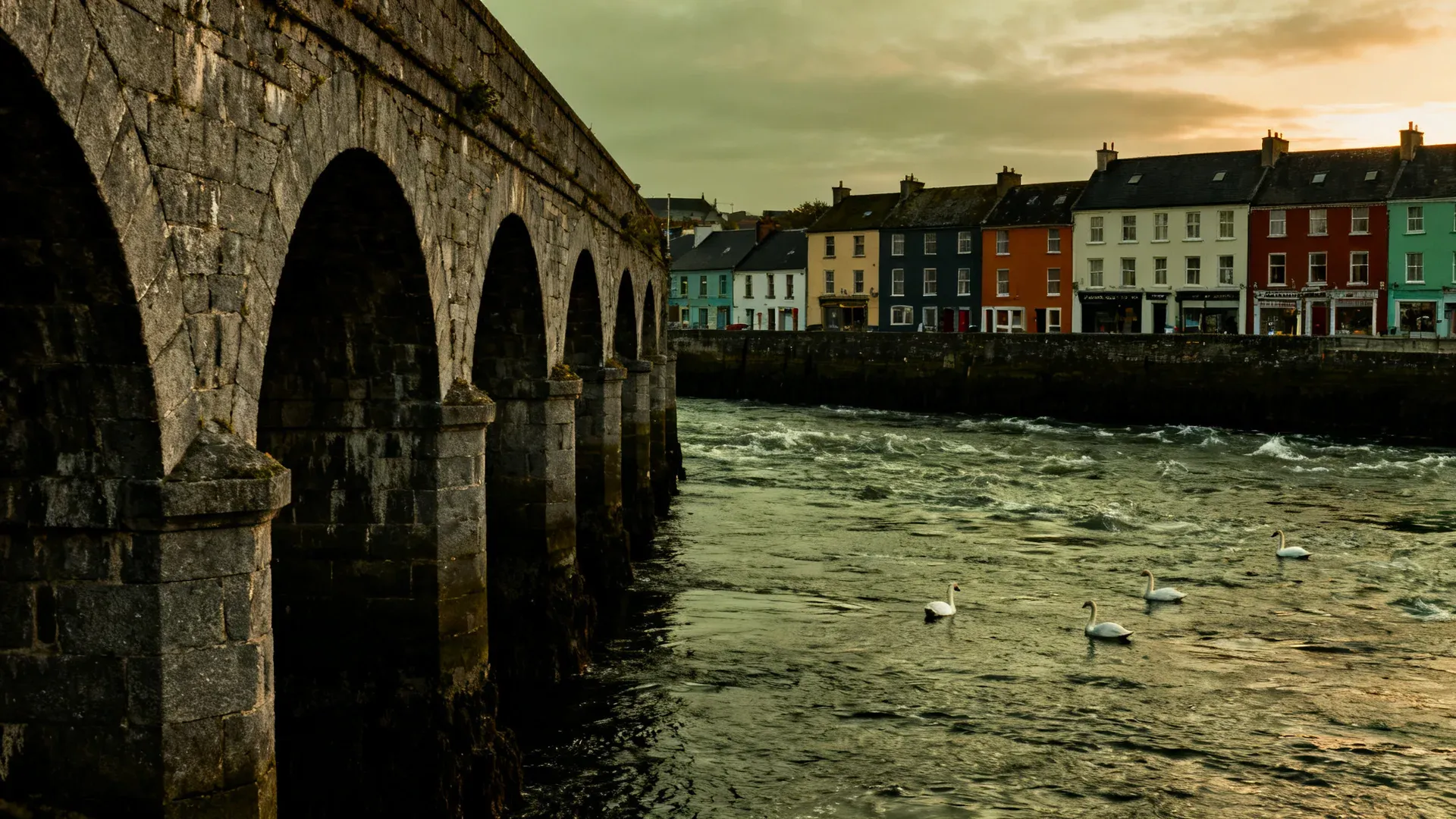
At the end of the quays, the Spanish Arch is a remnant of the town wall, extended in 1584 to protect the harbour. It was partly destroyed in 1755 by the tsunami from the Lisbon earthquake. From there, the Long Walk follows the Corrib, and the pedestrian streets of the Latin Quarter, around Shop Street, lead to the pubs and buskers that make the city's name.

The Salthill Prom

Salthill, Galway's seaside suburb, stretches along a promenade of about two kilometres facing the bay, with the Burren as a backdrop. At the far end, the Blackrock diving tower, built in 1953, is still where swimmers meet in every season. An ideal walk at the end of the day, right next to Galway Golf Club.

Arched stone bridge over a fast-flowing river, swans and colourful houses on the quay at dusk

When to go

From May to September the days are long and the courses in their best condition; July averages around 16 degrees. The climate is mild but wet all year, with about 1,150 millimetres of rain spread over the twelve months: rain and wind are part of the game, even in summer. April and October remain playable, quieter and cooler. July and August are the busiest months in the city.

Getting there

Shannon (SNN) is the most convenient airport, about an hour and a quarter by motorway. Dublin has more flights but means more than two hours on the M6; Knock, to the north, is another option. Direct trains link Dublin Heuston with Galway. Once there, a car is essential for Bearna, Renville and above all Connemara.

Frequently asked questions

What is the best golf course near Galway?

The Hawthorn, Christy O'Connor Jnr's championship course on the Renville peninsula, is the most complete close to the city. For true links golf, go to Connemara, about an hour and a half to the west.

How long does it take to get from Galway to Connemara Golf Links?

About an hour and a half: Clifden is 80 kilometres from Galway on the N59, and the course is at Ballyconneely, a few kilometres further along the coast road.

Which airport is best for a golf trip to Galway?

Shannon, about an hour and a quarter by road. Dublin is further, more than two hours away, but better served; Knock is an alternative depending on flights.

When is the best time to play golf in Galway?

From May to September, when the days are long and temperatures mild. It rains all year on the west coast: always pack rain gear.

Does Galway Golf Club welcome visitors?

Yes. The Salthill club welcomes visitors and groups; it asks you to contact it by phone or email to book.

Tailor-made

Your golf trip: Galway

Tee times, suites, transfers and tables: your concierge replies within 24 hours with a proposal shaped around you.

Explore: Ireland →