Golf guide • Northern Ireland • Northern Ireland

Golf in Belfast: on the fairways where Rory McIlroy grew up

Belfast, the capital of Northern Ireland, has four fine parkland courses within half an hour of the centre: Holywood, the club where Rory McIlroy learned the game, Royal Belfast, founded in 1881, and two layouts by Harry Colt and by Hawtree at Belvoir Park and Malone. Golfers come for tree-lined golf above Belfast Lough, a Michelin-starred table, Carlingford oysters and a city on a human scale. The best season runs from May to September.

Plan this tripUpdated

Belfast stretches along the head of Belfast Lough, the long sea inlet that opens towards Scotland. A shipbuilding city, where the Titanic was built, it has reinvented itself around its quays, its Victorian pubs and a food scene that counts two Michelin stars. For golfers, its great advantage is proximity: four parkland courses, beneath oaks and beeches, lie within half an hour of the centre, and Belfast City Airport is a few minutes from town.

On the south shore of the lough, the small town of Holywood is the natural starting point. Rory McIlroy joined the club there at the age of seven, and the course, perched on the hills above the town, keeps his trophies and his memory. A little further along the coast, at Craigavad, Royal Belfast claims the title of Ireland's oldest club. South of the city, Belvoir Park and Malone, two clubs that have hosted the Irish Open, complete the programme.

Three to five nights are enough to play all four courses and keep a day for Titanic Belfast, the Cathedral Quarter or the Ulster Folk Museum at Cultra. Those with more time then head for the province's great links: Royal County Down is about an hour's drive from Royal Belfast, Royal Portrush an hour and a half, and each deserves a stay of its own.

The courses

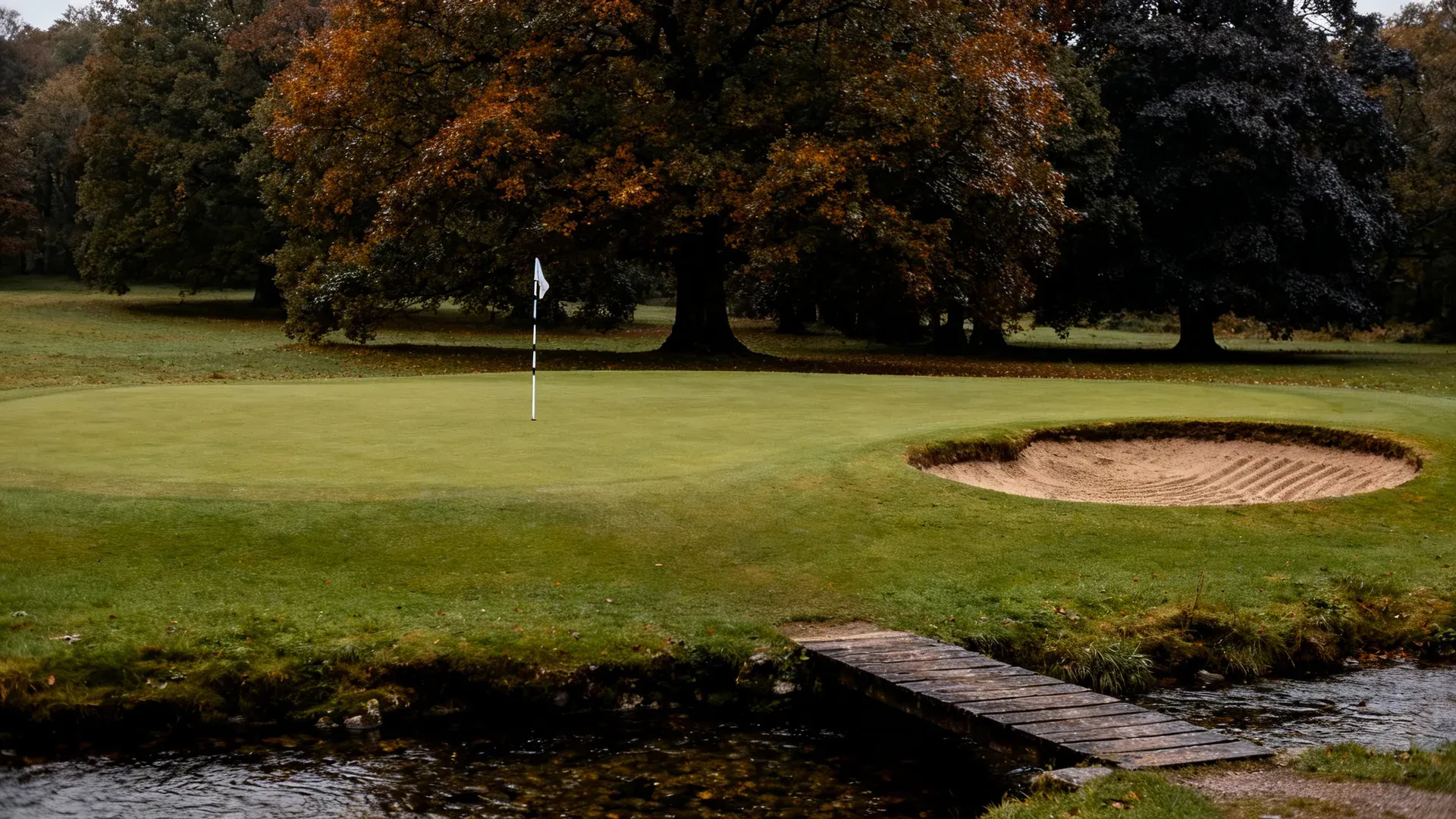
Parkland green edged by a bunker and tall autumn trees, a small stream and wooden footbridge in the foreground

Holywood Golf Club

  • Opened 1904
  • 18 holes
  • Par 70

Founded in 1904 on nine holes leased on the Irish Hill, the club acquired in 1923 the land that allowed it to expand to eighteen holes. The course, a par 70 from the white tees, follows the slopes of the Holywood Hills, about eight kilometres from central Belfast, with open views over Belfast Lough from the high ground and the clubhouse. This is where Rory McIlroy learned to play, and the club offers a tour devoted to his trophies. A fair but demanding layout that suits every level.

Signature hole. The 12th, the hardest hole, is a 433-yard par 4 from the white tees, running downhill between two small water hazards to a raised green. McIlroy's advice: aim right off the tee and on the approach, as the slopes bring the ball back to the centre.

Official website
Royal Belfast Golf Club

  • Architect: Harry Colt; Mackenzie & Ebert (2017)
  • Opened 1925
  • 18 holes
  • Par 70

Founded in 1881 and granted its royal title in 1885, Royal Belfast claims the title of Ireland's oldest golf club. After two moves, it settled in 1925 at Craigavad, on the south shore of Belfast Lough, on a course designed by Harry Colt whose bunkers were reworked by Mackenzie & Ebert in 2017. A par 70 of just over 6,300 yards: here precision prevails over power, among clumps of trees, quick greens and views of the Antrim hills. The Victorian clubhouse, a former mansion, is worth the trip on its own.

Signature hole. Holes 9 to 11 run along the shore of the lough, with the water and the Antrim hills as a backdrop: the most memorable stretch of the course.

Official website

Belvoir Park Golf Club

  • Architect: Harry Colt
  • Opened 1927
  • 18 holes
  • Par 71

Just a few kilometres from the city centre, Belvoir Park is a layout by Harry Colt, the architect of Royal Portrush's Dunluce Links, opened in 1927 on 163 acres of ancient woodland. Its rolling fairways run between great avenues of oak, beech and fir, and the original design has changed little since. A par 71 of just under 6,600 yards, it hosted the Irish Open in 1949 and 1953; Harry Bradshaw considered it the finest inland course he had played. A classic for steady players.

Official website

Malone Golf Club

  • Architect: John Harris; Hawtree & Son (1965)
  • 27 holes

Founded in 1895 at Stranmillis, where it hosted the Irish Open in 1933, the club moved in 1960 to the Ballydrain estate, south of Belfast. Its twenty-seven holes, designed by John Harris and then reworked by Hawtree & Son in 1965, are divided into three nines, Drumbridge, Ballydrain and Edenderry, around a large natural lake stocked with trout. The Championship course combines the first two, and water comes into play from the 13th through to the 18th, where any ball pushed right of the green ends up in the lake. A course of great trees and water, for players who enjoy strategy.

Signature hole. On the 15th, the tee shot carries water all the way to a rolling, delicate green.

Official website

Where to stay

Culloden Estate & Spa

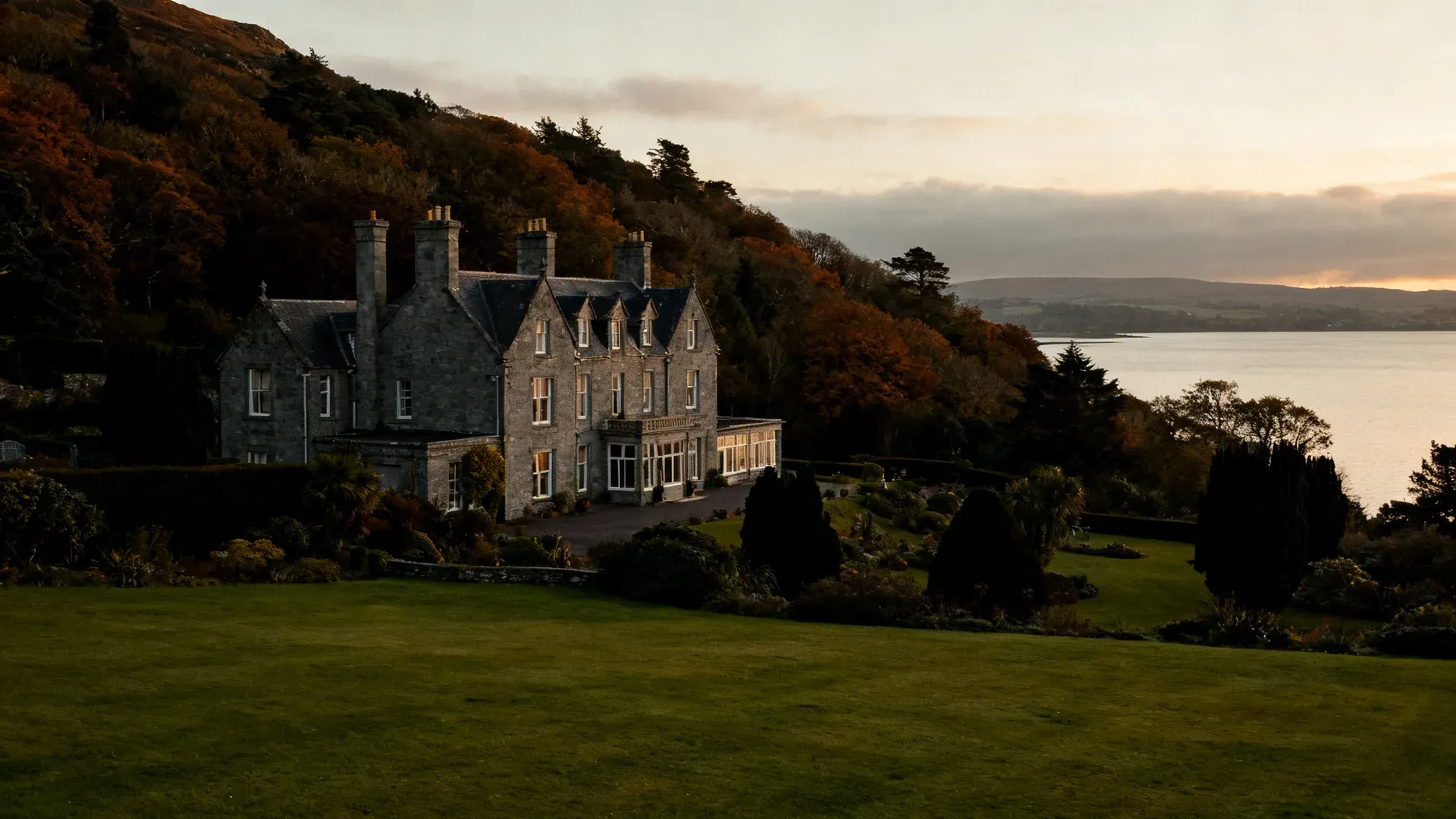
Built in 1876 in the Scottish Baronial style for the Bishops of Down, Connor and Dromore, the house overlooks Belfast Lough from twelve acres of gardens. Bought in 1967 by Sir William Hastings, it became Northern Ireland's first five-star hotel in 1996. Ask for a Deluxe Lough View room and, after your round, save an hour for the spa sauna, which looks out over the lough. Holywood and Royal Belfast are a few minutes away.

The Merchant Hotel

In the heart of the Cathedral Quarter, the former Ulster Bank headquarters, built in the late 1850s by the Glasgow architect James Hamilton, became a hotel in 2006. Its rooms play on two registers, Victorian and Art Deco. The old banking hall, under its dome and original plasterwork, is now the Great Room: book afternoon tea there, served in two sittings on Saturdays. Malone and Belvoir Park are about twenty minutes away.

Grand Central Hotel Belfast

Opened in 2018 in the former Windsor House office tower, the Grand Central takes its name from a vanished Victorian grand hotel on Royal Avenue. Run by the Hastings group, it is the most practical base in the city centre, a quarter of an hour from Belvoir Park. On the 23rd floor, The Observatory bar has a 360-degree view over the city: book a table for early evening, and note the smart dress code, no shorts.

Grey-stone mansion with tall chimneys, gardens and lawn above a sea lough at dusk

Where to dine

OX

Opened in 2013 on the Lagan quays by Belfast-born Stephen Toman and Alain Kerloc'h, from Brittany, OX has held a Michelin star since 2016. Seasonal menus built with the region's suppliers, and a kitchen open to the dining room. Our tip: the three-course lunch on Fridays or Saturdays, the easiest way to try it between two rounds. The restaurant is closed Sunday to Tuesday; its wine bar, OX Cave, pours almost everything by the glass.

Mourne Seafood Bar

A marine biologist turned oyster farmer on Carlingford Lough, Bob McCoubrey opened Mourne Seafood Bar in Dundrum in 2005, then in Belfast in 2006, in a former bar on Bank Square. The shellfish come from his own beds. Order the Carlingford oysters and the chowder, with a Guinness, the owner's favourite pairing, and book at weekends. After Royal County Down, the sister restaurant in Dundrum is on the way back.

Beyond golf

Titanic Belfast

Opened in 2012 on the site of the former Harland & Wolff shipyard, where the Titanic was built, the museum raises its angular façades, clad in 3,000 aluminium shards, between the launch slipways of the Titanic and the Olympic. Its nine galleries tell the story of the city's industrial rise, the building and sinking of the liner, then the discovery of the wreck. Allow half a day.

Ulster Folk and Transport Museums

At Cultra, eleven kilometres east of Belfast and a stone's throw from Holywood, the folk museum opened in 1964 brings the Ulster countryside of the past back to life, with reconstructed buildings and craft demonstrations. On the same site, the transport museum holds the largest railway collection in Ireland. A good half-day after a round at Holywood or Royal Belfast.

Holywood, the maypole town

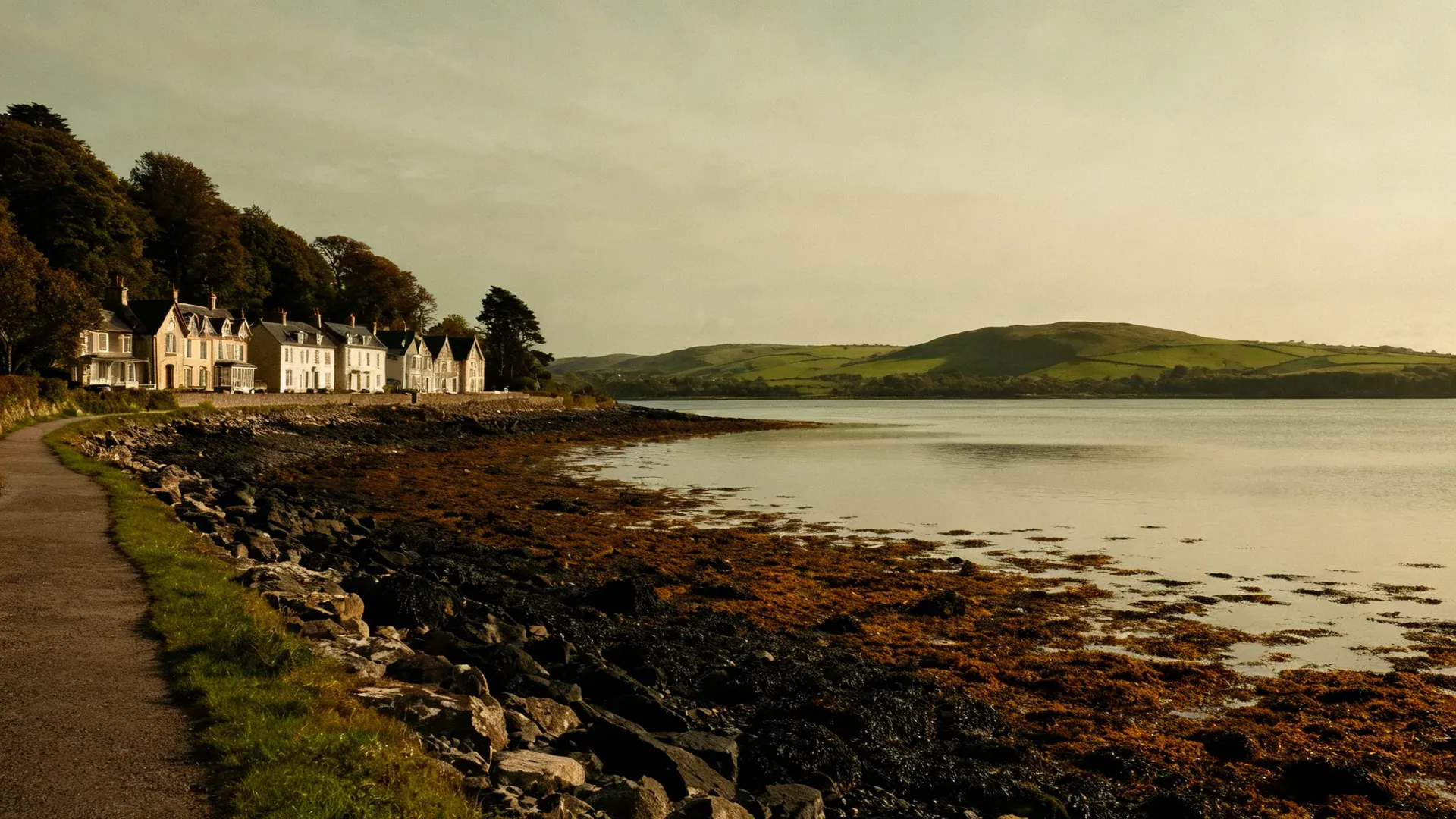
A seaside resort from the early 19th century, Holywood grew with the arrival of the railway from Belfast in 1848. Its maypole, in the centre of town, is said by tradition to come from the broken mast of a Dutch ship around 1700. The ruins of the priory, where the botanist Robert Lloyd Praeger is buried, and the cafés of the high street can be seen in an hour, before or after golf.

Coastal path along a rocky, seaweed-covered shore, Victorian villas beneath trees, hills in the distance

When to go

The golf season runs from May to September: the days are very long around June, temperatures mild and the parkland courses at their best. April and October remain pleasant and quieter, with spring or autumn colours beneath the trees, but more frequent showers. In winter, parkland courses can be waterlogged, and some clubs occasionally close part of the course.

Getting there

George Best Belfast City (BHD), five kilometres from the centre, is the most convenient airport: about fifteen minutes by road to the centre and to Holywood alike, with flights from London and Amsterdam. Belfast International (BFS), 21 kilometres to the north-west, offers more European routes, including Paris in some seasons. Once there, a car or driver lets you string the four courses together effortlessly.

Frequently asked questions

Where did Rory McIlroy learn to play golf?

At Holywood Golf Club, about eight kilometres from central Belfast, which he joined at the age of seven. The club welcomes visitors every day and offers a tour devoted to his trophies.

What is the best golf course in Belfast?

Royal Belfast, founded in 1881 and designed by Harry Colt on the shore of Belfast Lough, and Belvoir Park, another Colt layout that has hosted the Irish Open, are the two benchmarks. Malone, with its twenty-seven holes around a lake, completes the trio.

Can visitors play Royal Belfast?

Yes. The club welcomes visitors who are members of a recognised club, who may be asked to show a handicap certificate. Tee times can be booked online or by phone.

Which airport is best for a golf trip to Belfast?

Belfast City (BHD), about fifteen minutes from the centre and from Holywood. Belfast International (BFS), 21 kilometres to the north-west, offers more flights to Europe.

When is the best time to play golf in Belfast?

From May to September, when the days are long and the courses in their best condition. April and October are quieter but cooler, with more frequent showers.

Tailor-made

Your golf trip: Belfast

Tee times, suites, transfers and tables: your concierge replies within 24 hours with a proposal shaped around you.

Explore: Northern Ireland →