Golf guide • Scotland • Central Scotland

Golf in Perthshire: playing the land of Scotland's kings

Perthshire, in central Scotland an hour from Edinburgh, brings together three great heathland courses: James Braid's King's Course and Jack Nicklaus's PGA Centenary at Gleneagles, and Blairgowrie Rosemount, laid out by Alister MacKenzie and reworked by Braid. Golfers come for heather-and-pine golf sheltered from the links wind, for a two-Michelin-star restaurant, old inns and the whisky. The best season runs from May to September.

Plan this tripUpdated

Between the Ochil Hills to the south and the first foothills of the Grampians to the north, Perthshire is where Scotland crowned its kings for centuries, on the Moot Hill at Scone. It is also the home of inland golf: courses laid across moorland, among heather, gorse, Scots pine and birch, on sandy soil that drinks up the rain. The wind matters less than by the sea; precision matters more. James Braid left two of his finest designs here.

Gleneagles, opened in 1924 by the Caledonian Railway, remains the centre of gravity: three championship courses, a railway station close by and a two-Michelin-star restaurant under its roof. Less than an hour to the north-east, Blairgowrie is the county's other great fixture, quieter, set in a pine forest where Greg Norman won his first European Tour title in 1977.

Further north, Pitlochry and the valley of the Garry open the door to the Highlands: distilleries, wooded gorges, Blair Castle and small houses where you eat as well as in any city. Four to six nights are enough to play all three courses without rushing and still keep a day for whisky, history or a walk in the woods.

The courses

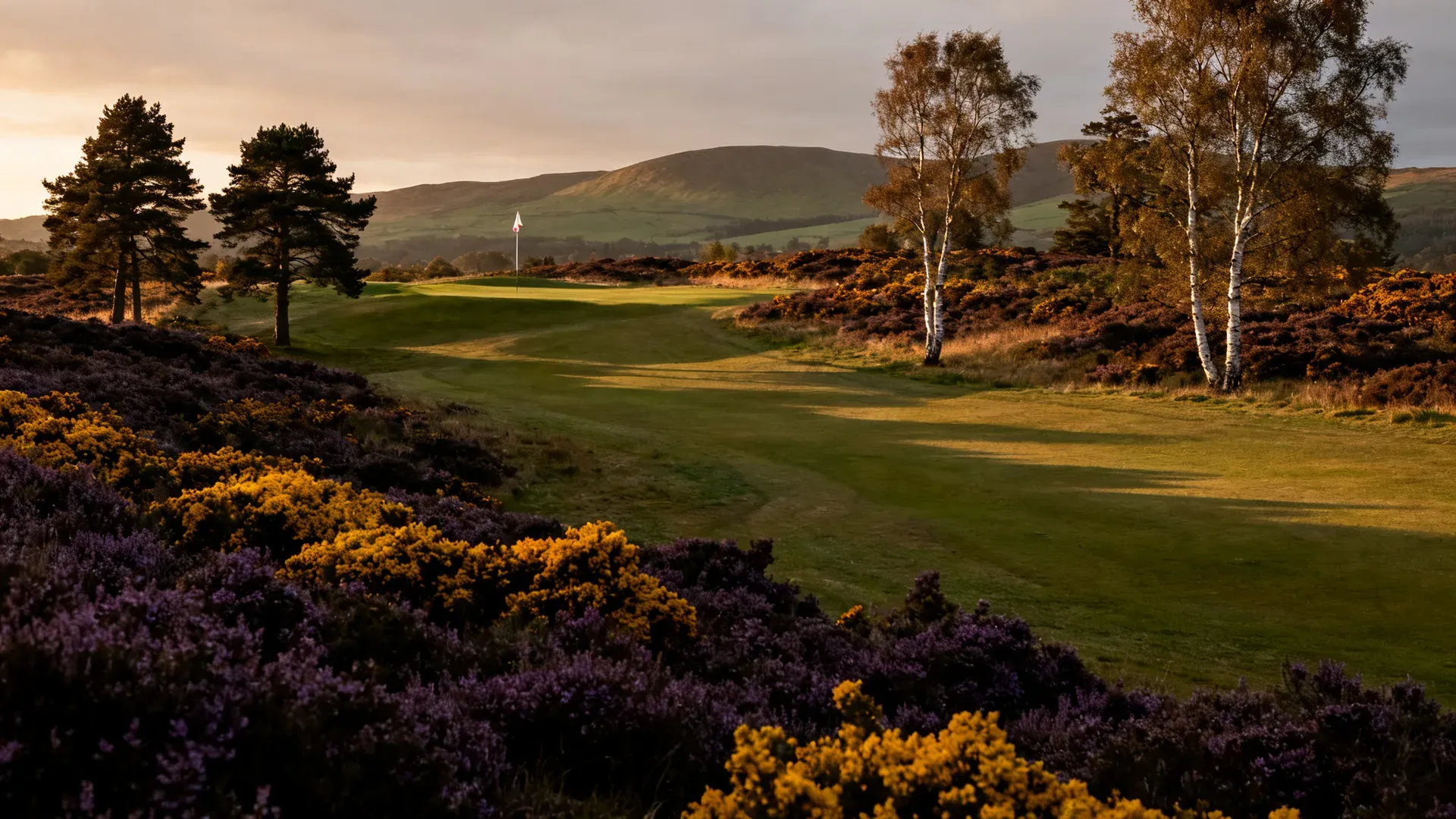
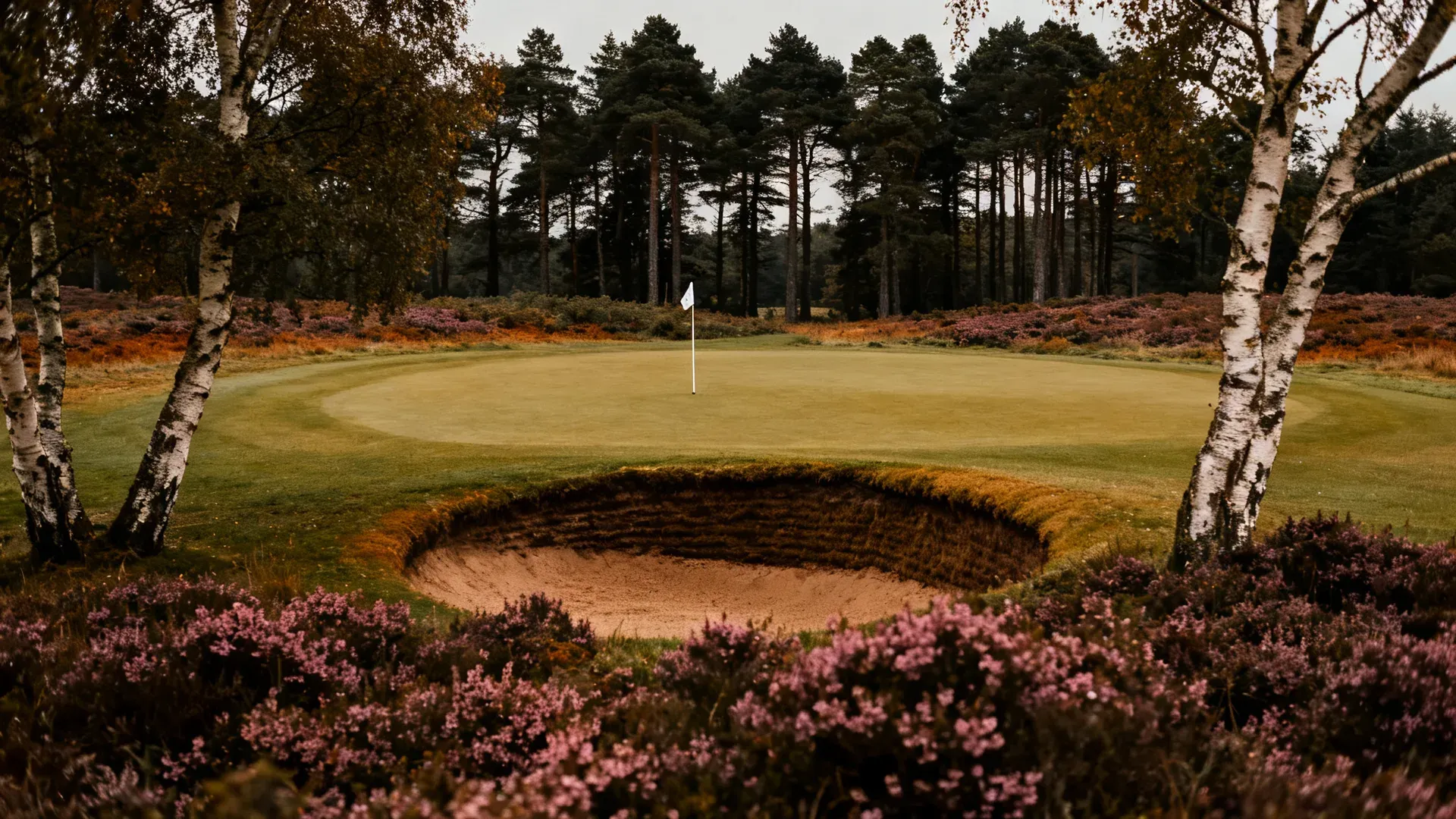
Heathland green ringed by heather and birches, a turf-faced bunker, Scots pines in the background

Gleneagles King's Course

  • Architect: James Braid
  • Opened 1919
  • 18 holes
  • Par 70

Opened in 1919 and widely regarded as James Braid's masterpiece, the King's Course winds along the ridges of the Gleneagles estate, facing the Ochil Hills and, on a clear day, the peaks of the Grampians. Fairways roll between heather and gorse, several approaches are blind, and the greens defend themselves with slope rather than length. Every hole carries a Scots name, from Dun Whinny at the start to King's Hame at the finish. In 1921 it hosted a match between British and American professionals, often described as the forerunner of the Ryder Cup. It suits every level, provided you are happy to play with the ground.

Signature hole. The 13th, Braid's Brawest, is the hole Braid rated the best on the course: a 448-yard par 4 from the white tees, where the Auld Nick bunker waits for any drive pulled left.

Official website
Gleneagles PGA Centenary Course

  • Architect: Jack Nicklaus
  • Opened 1993
  • 18 holes
  • Par 72

Designed by Jack Nicklaus and opened in 1993 as the Monarch's Course, it took its current name in 2001 to mark the PGA's centenary. This is the tournament course: the 2014 Ryder Cup and the 2019 Solheim Cup were both played here. Longer and more open than its two neighbours, it unfolds in broad fairways and raised greens, with the Ochil Hills as a backdrop from every tee. It rewards steady ball-strikers, yet five sets of tees make it manageable for higher handicaps.

Official website

Blairgowrie Rosemount

  • Architect: Alister MacKenzie; James Braid (1934)
  • Opened 1927
  • 18 holes
  • Par 72

Founded in 1889, Blairgowrie Golf Club asked Alister MacKenzie to extend its course as early as 1914; the war pushed the opening of the full eighteen back to 1927. James Braid then reworked it in the early 1930s, and it is largely his routing that is played today, with original bunkers reopened. Corridors of pine and birch, heather, silence: Rosemount is a forest course that asks for precision rather than power. Greg Norman won the Martini International here in 1977, his first victory in Europe.

Signature hole. The 17th, Plateau, is a par 3 to a two-tier green: take enough club to reach the right level and avoid the three-putt.

Official website

Where to stay

The Gleneagles Hotel

Opened in June 1924 by the Caledonian Railway, which wanted a country palace at the end of its line, Gleneagles presides over its three courses near Auchterarder, with a spa, falconry, fishing and riding. The first tees are a few minutes' walk from the rooms and the station a few minutes' drive. Restaurant Andrew Fairlie, inside the hotel, takes its own bookings: reserve it directly, at the same time as your room.

Ballathie House Hotel

Built in 1880 on the banks of the Tay at Kinclaven, at the heart of a salmon-fishing estate, this Scots Baronial house became a hotel in 1972; the future Queen Mother came to dance at a house party here in 1922. Ask for a first-floor room in Riverside House, with a balcony over the river. Rosemount is about twenty minutes away, and the hotel secures preferential green fees at Blairgowrie.

The Fortingall

Built in 1891 for the shipowner Sir Donald Currie by the architect James Maclaren, The Fortingall is among the most remarkable examples of the Arts and Crafts movement in Scotland. Restored by its owner, the interiors house Anbôise, it pairs period panelling, handmade furniture and antiques. At dinner, choose the estate venison or lamb, then walk to the Fortingall Yew, several thousand years old, in the churchyard next door. Gleneagles is about an hour's drive.

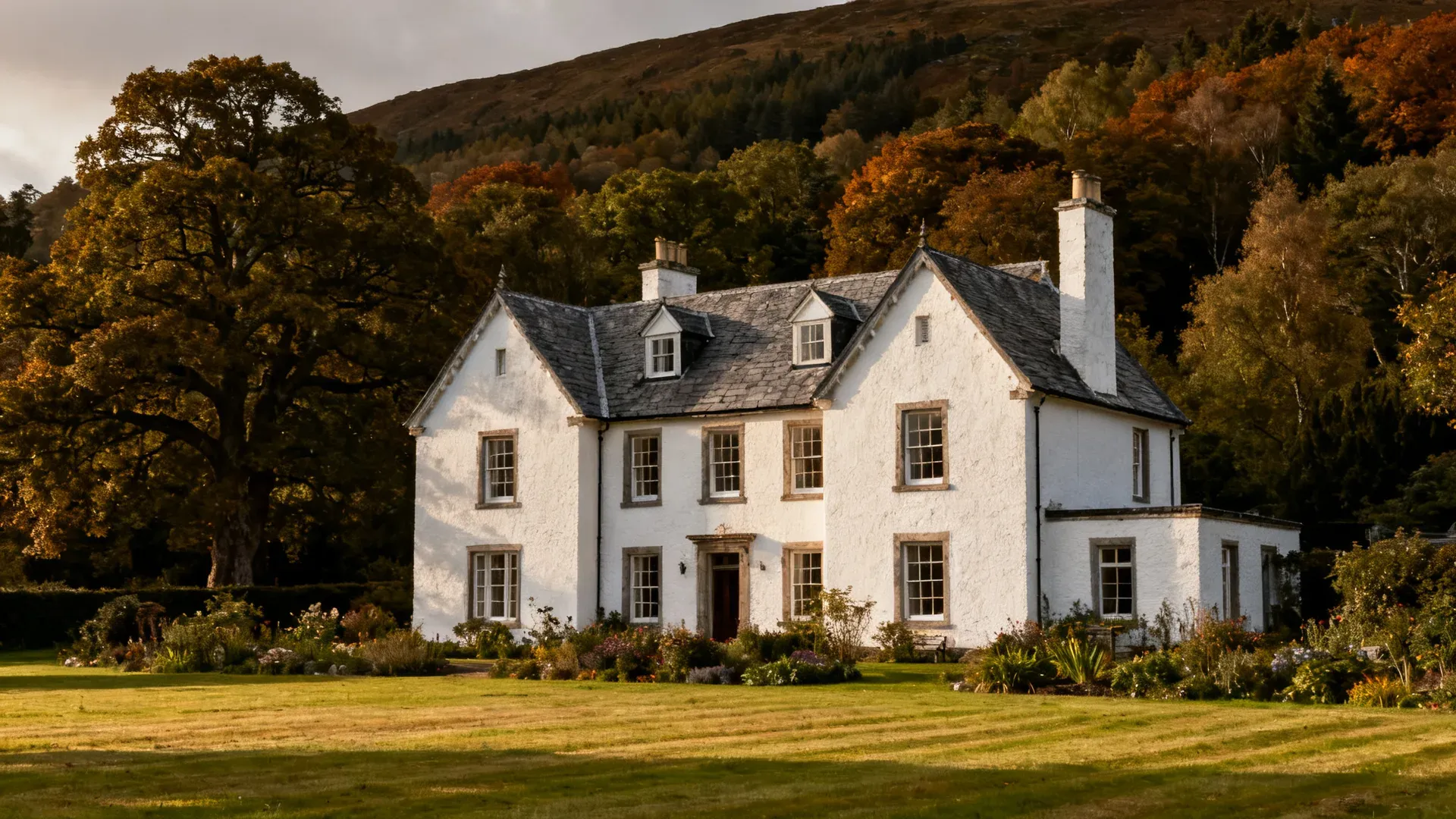
Whitewashed country house with a slate roof, lawn and garden, in front of a wooded hill in autumn

Where to dine

Restaurant Andrew Fairlie

Opened in 2001 inside the Gleneagles hotel, the restaurant bears the name of its founder, who died in 2019, and is still led by Stephen McLaughlin, its chef since day one. Two Michelin stars, a dining room of dark wood panelling, and cooking with a French heart and a Scottish soul, fed by a walled kitchen garden. Order the home-smoked lobster with lime and herb butter, the signature dish. Dinner only.

The Meikleour Arms

An inn since 1820, the Meikleour Arms belongs to the Meikleour estate, acquired by the Mercers of Perth in 1162 and long tied to France: the cooking is country food with a French accent. Order the estate venison or beef, cut by the in-house butcher, and at the bar a pint of The Lure of Meikleour. Blairgowrie's Lansdowne course, ten minutes away, is named after the owner's grandfather.

Moulin Inn

In the hamlet of Moulin, just over a kilometre from Pitlochry, the inn has been welcoming travellers since 1695 and is still the locals' pub. Its brewery, opened in 1995 in the old coach house just across the road, offers free tours on weekdays. At the bar, ask for Ale of Atholl, or Old Remedial brewed with local honey, alongside generous pub food. The Ben Vrackie path starts just above the village.

Beyond golf

Scone and the Stone of Destiny

At Scone, the kings of Scotland were inaugurated on the Moot Hill, seated on the Stone of Destiny. The present palace, rebuilt in the early 19th century for the Earls of Mansfield, is open to visitors along with its gardens and pinetum. The Stone itself, taken to London in 1296 and later kept in Edinburgh, has been on display since 2024 at Perth Museum, in the former city hall, a few minutes away.

Glenturret and the whisky trail

Founded in 1763, Glenturret in Crieff claims the title of Scotland's oldest working distillery. Guided tours and tastings should be booked ahead and pair easily with lunch after a round at Gleneagles. Further north, Pitlochry has two more distilleries, Blair Athol in town and Edradour in the hills above, for a well-filled rest day.

Killiecrankie and Blair Castle

At the Pass of Killiecrankie, a woodland path follows the Garry to the Soldier's Leap, the gap a government soldier is said to have jumped to escape the Jacobites after the battle of 1689. A few kilometres away, Blair Castle is home to the Atholl Highlanders, the Duke of Atholl's ceremonial regiment, often described as the only legal private army in Europe.

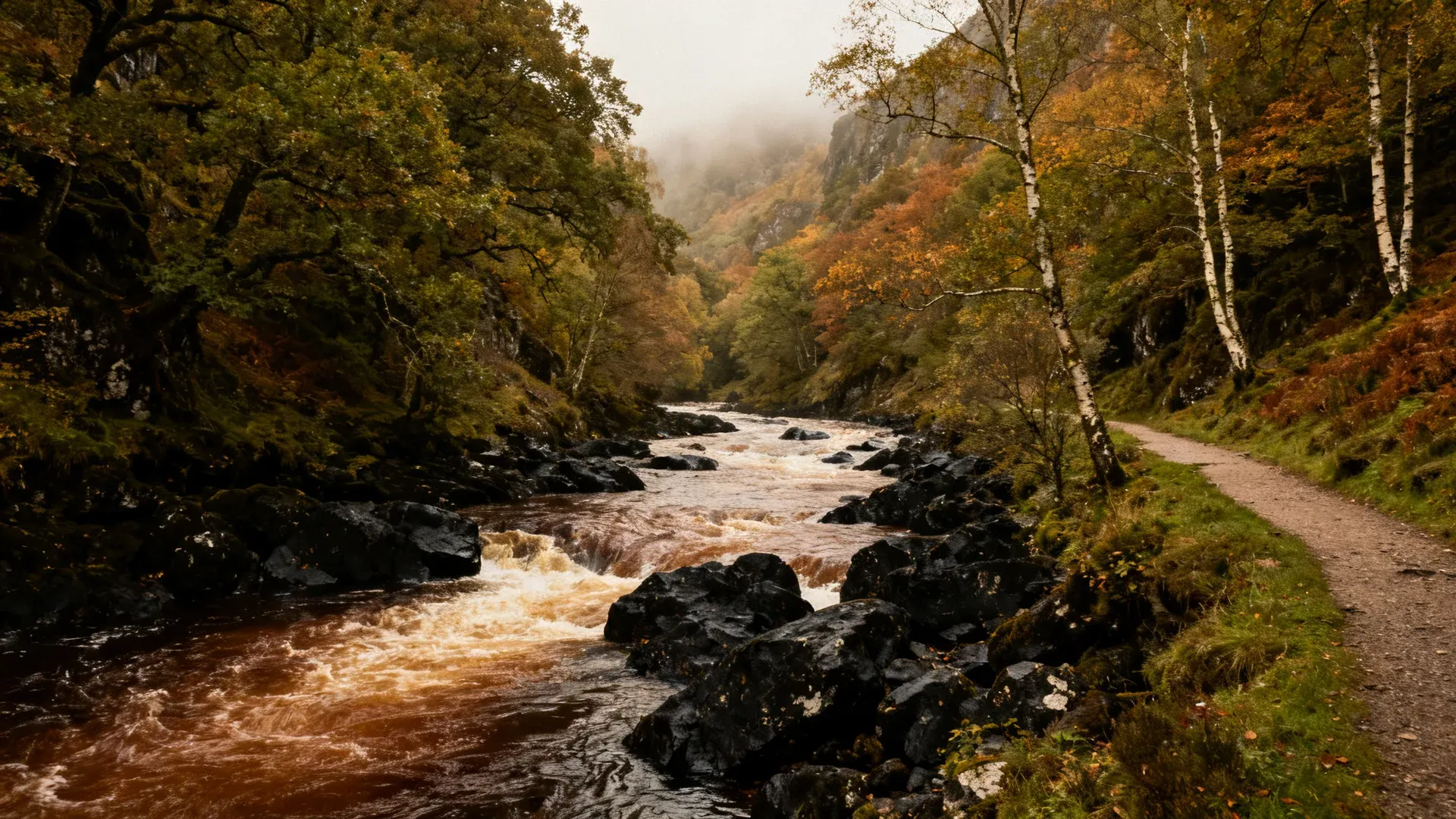
Peat-brown river rushing through a wooded gorge in autumn colours, a riverside path and light mist

When to go

The golf season runs from May to September: very long days around June, mild temperatures that rarely pass twenty degrees, and heather in bloom in August. April and October remain playable, with quieter courses and autumn colour in the forests, but shorter, cooler days. Winter brings temporary greens and maintenance closures. The sandy soil of the heathland courses drains quickly after rain.

Getting there

Edinburgh (EDI) is the most convenient airport, about an hour's drive from both Gleneagles and Perth; Glasgow (GLA) is a similar distance. Trains link both cities with Gleneagles, Perth and Pitlochry, and the Caledonian Sleeper leaves London in the evening to call at all three stations early the next morning. Once there, a car with driver is the simplest way to move between courses.

Frequently asked questions

What is the best golf course in Perthshire?

The King's Course at Gleneagles, designed by James Braid and opened in 1919, regularly ranks among the best inland courses in the United Kingdom. Blairgowrie Rosemount, set in pine forest, is the county's other great classic.

How many golf courses are there at Gleneagles?

Three eighteen-hole championship courses, the King's, the Queen's and the PGA Centenary, plus the Wee Course, a nine-hole course of par 3s.

When is the best time to play golf in Perthshire?

From May to September, when the days are long and the courses in their best condition. April and October are quieter but cooler, and the Gleneagles courses close in turn for maintenance late in the season.

Which airport is best for a golf trip to Gleneagles?

Edinburgh, about an hour's drive away. Glasgow is a good alternative depending on flights, and trains run directly to Gleneagles station.

Can visitors play Blairgowrie without being a member?

Yes. The club welcomes visitors on Rosemount, Lansdowne and the Wee Course, with online booking; tee times are harder to find on members' competition days.

Tailor-made

Your golf trip: Perthshire

Tee times, suites, transfers and tables: your concierge replies within 24 hours with a proposal shaped around you.

Explore: Scotland →